Unfortunately it is from 2022, meaning no OS upgrades.
I think the next mandatory laws EU should pass is that manufacturers should either allow people to upgrade/replace the OS by themselves or provide mandatory upgrades for the next decade (i don't care how the manufacturers handle it, that's up to them, but the easiest way out of such a law is to allow people upgrade/replace the OS by themselves).
The regulation already mandates an OS upgrade period, but the period depends on how long the manufacturer keeps selling the model: software updates must be provided for five years from the day when the manufacturer stops selling the product. From Annex II B, section 1.2:
> (6) Operating system updates:
> (a) from the date of end of placement on the market to at least 5 years after that date, manufacturers, importers or authorised representatives shall, if they provide security updates, corrective updates or functionality updates to an operating system, make such updates available at no cost for all units of a product model with the same operating system;
Why only one decade? I’m still running a 2012 Mac mini. Apple stopped updating Mac OS some time ago, but there are plenty of alternatives that can run on the bare metal. Hardware makers should be required to provide support for the life of the device (defined by customers still using the device), or provide a reasonable way to install 3rd party OS.
At least on Android, when my Samsung Galaxy Note (I loved that phone - replaceable battery, pressure sensitive stylus, IR blaster, OLED, audio jack, water resistant - they went downhill from there IMO) finally end of lifed, I just used the official Samsung tool to upload a community image on it. The process wasn't horrendously difficult. I don't know if people would do it, but it was a clear set of steps that even a tech novice could accomplish if following carefully.
Indeed! The law needs to include firmware in some way. I'm not smart enough to come up with how exactly it should be dealt with, but it does need to be dealt with.
Currently Qualcomm decides when your phone stops getting updates, pretty much regardless to who actually made your phone.
Shoutout to fairphone who actually updated the firmware themselves, surely a loss leading project, but a very respectable dedication to end users.
Shoutout to fairphone who actually updated the firmware themselves, surely a loss leading project, but a very respectable dedication to end users.
I am not sure how much of a shout-out they deserve. For example, Fairphone 4 is still supported until this year. They ship with firmware from 2023 and with a kernel patch release from 2024. Every one of their phones is full of holes because their software lags so much.
Even on their most recent model, they are frequently more than a half year behind firmware updates, ship 1-2 year old kernels, and are late with major Android releases (meaning you miss out on security patches not classified high/critical).
Good examples of software longevity are iPhone, Google Pixel, GrapheneOS, and to a lesser extend Samsung flagships.
Samsung committed to 5 years of OS upgrades on that one, so it’s theoretically getting one more upgrade next year at best. (Or maybe 2, if they release one this year). It’s nearly end of life for a software perspective.
So, they have an XCover 7 now - with similar specs.
Also, they committed to a rather long support cycle for the xcover6 (5 years I think?) - I have one and it is still going strong. I've replaced the battery twice - not because I desperately needed to, but... why not. They are cheap, and I use the older ones still as backup battery packs since they are fast to swap in.
Yeah they are really meant for businesses. Frontline workers, factory floors.
This is what we use them for and they do stand up to the abuse. Of course people treat them very badly as it's not something they paid for. Really long support too.
They're not good in terms of specs for the price but that is not what these phones are about.
Yeah, the specs were... decent... nothing standout. Really I was going over the list of things I had lost after the Galaxy Note got rid of all their features and decided the replaceable battery was the one I cared about the most. The ruggedness was just a nice plus.
Phones should be like PCs - they give you the hardware, and you figure out what to install on it. Unfortunately Linux imo is partially to blame here - if they decided to do a stable driver ABI (don't hate me, this was the norm outside Linux and open source OSes), you could easily separate the OS and drivers and update the m separately.
The missing link here is ACPI, unlike on PC, the hardware doesn't describe what it has to the OS, making the task much harder.
The lack of standardization of handled devices is also another factor, they might look similar or even identical but they often are different per region and have some hardware revisions.
Android does have a separate driver partition nowadays but that doesn't help too much.
Who is "they"? Linux isn't a person or an organization. The people (and organizations) contributing to Linux are all doing it for their own motivations to solve their own problems. You are asking them to make their lives harder, for free, in service of fixing an issue that they don't care about.
Linus Torvalds for one, but generally people in charge of the kernel have a principle of API/ABI compatibility outside the kernel, but no promise for API ABI stability for anything inside, including drivers.
And all of the commenters complaining they would never buy this phone is great proof that the removable battery movement is DOA.
These phones exist. Companies have been producing them intermittently. When they do, few people buy them and there are always complaints that it's too big, too ugly, not fast enough, or something else.
The vocal minority demanding this feature but refusing to buy phones with the feature believe they can have their cake and eat it too. They want phones with all the benefits of built-in batteries and none of the downsides of removable batteries.
Well, I want a phone that's about one tier below flagship and has certain features. I don't think that's unreasonable.
For comparison: The feature I look for the most is a microsd slot. The last time that option existed that was in the quality range I want, I bought it. For anyone buying a phone right now, samsung has dropped microsd support from multiple more tiers, google and apple have never offered it, motorola and some others have the physical hardware but won't properly update the phone...
That's a feature that has been demonstrated to have no meaningful downsides, and manufacturers won't put it in to good models. I'm not convinced batteries are very different. People's refusal to make huge unnecessary compromises doesn't prove any features are DOA. I can guarantee that the above phone using LCD instead of OLED isn't a compromise for the battery's sake.
The biggest downside of removable batteries is that it's not an option on good phones. There might be some solid physics-based reasons, unlike with microsd, but I'm skeptical.
What you think is reasonable is completely irrelevant. What the marketing, business development, and C-suite groups decide is the best course, will be done.
I can want three cupholders, not two, on my next car, and I want it to be a Toyota EV in purple. Not too much to ask - but Toyota has no reason to make it for me. Not even if 100 of us on Toyota superfan sites want it.
For the record, I want removable batteries and the ability to change my phone's OS. But if there's not sufficient market pressure, it ain't gonna happen - without legal force. And that won't happen if the businesses have too much lobbying power (USA), or it's specifically against government interests (3-letter orgs wanting backdoors).
> What you think is reasonable is completely irrelevant.
Sure!
My point is that the ability to "vote with your wallet" is not really there in many cases, and lack of purchases for some niche and low end phone with a feature is not strong evidence that the feature is unwanted.
> But if there's not sufficient market pressure, it ain't gonna happen - without legal force.
And it takes too much market pressure to make certain changes even when the tradeoffs are minimal, so I welcome the legal force in a lot of cases.
I always felt the issue with removable batteries was they had a smaller capacity and would run out of life faster - so the need to be able to replace a battery if you wanted your phone to last more than a few years was important.
Now, with much higher capacity batteries that work better and are more efficient at handling all the demanding displays, high end gpu's and now AI tasks running the background? There's really no need to have removable batteries any more.
Sure, you're going to get a few lemons here and there, but for the most part, batteries these days have no problem lasting the 4-5 years that you need them. You still see three or four year old iphones on ebay with 80-85% battery being sold like hot cakes.
What are you basing this on? If you would approach a random person on the street and try to pitch them this idea of bringing back swappable batteries, I think that most people would like the idea. Although this is not a "dataset" per se, I have not talked to a single person IRL that disagreed with this, which includes a mechanical engineer that worked in phone manufacturing
> And all of the commenters complaining they would never buy this phone is great proof that the removable battery movement is DOA.
I had to reflect on that statement for a bit. I've always bought a new phone when there are battery problems or something else. BUT, that's because I can easily afford it.
There are plenty of people in this world who just can't go out and buy a new phone because one part wore out.
Or, to put it differently: I'd really like to replace the battery in my spare phone that I bring into my hot tub.
> There are plenty of people in this world who just can't go out and buy a new phone because one part wore out
Why is this strawman all over this thread? Battery replacement services are well known and honestly affordable. Apple will even do a first-rate job of replacing an iPhone battery for a fraction of the price of a new phone.
This topic is so strange on Hacker News because everyone is either actually unaware of how cheap/easy it is to get battery replacements, or they're feigning that you have to throw away the entire phone to try to make a point.
I don't think you understand just what it's like to be poor. Every penny counts, and something that you can do yourself without specialized tools is a life saver.
I don't think you understand just what it's like to be rich. Every minute counts, and ordering a replacement part that shows up on your doorstep instead of needing to go somewhere to have someone do something (or coordinate a repairman) is a life saver. Likewise, money saved on an easy repair is spent elsewhere.
These aren't strawmans; you're using fancy words to justify your lack of empathy.
I feel like the fact that the phone-with-removal-battery option already exists and is not popular in the market should be a signal to EU politicians about how much the public actually values this capability.
I don't think the mobile phone market produces variety, somehow its market forces make it strive for uniformity. All phones are basically of the same from factor (with the two foldable ones being niches), roughly the same size, same battery, same connectors, one of two OS, etc.
That's fine, but even among Android users, nobody buys these removable battery phones. It's possible there's a disproportionate reservoir of iPhone&removable battery-only consumers, but it would surprise me if the desire for a reusable battery were strongly correlated with being locked into the Apple ecosystem. If anything, I would expect the propensity to desire removable batteries is more strongly correlated with Android use.
There are a plethora of reasons to prefer one phone to another and while removable battery phones exist if that's a strict criteria for you the market of available devices is extremely limited. Consumers don't have a real choice here.
I would expect that one of the main reasons that people prefer non-removable battery phones are the engineering tradeoffs inherent in making a phone with a removable battery. They will have strictly less choice on this axis when they no longer have the option to buy a non-removal battery phone.
I think you are vastly overvaluing how much consumers actually value phone thinness. The majority of consumers use phone cases (most modern phones have a camera popup specifically to be better compatible with a case to this end) so I think what customers value the most is lighter weight - not smaller form factor. A replaceable battery does come with a slight compromise to weight but stopping the endless chase of thinness has several engineering advantages when it comes to ports and cooling.
I don't think your speculation is completely unreasonable, but I just want to point out that consumer preference as revealed by current, actual reality only provides evidence in favor of my side of the argument. It's totally possible that the manufacturers are completely wrong about consumer preference and they are acting against their own interests by making the batteries non-replaceable, and somehow none of the manufacturers noticed this or were able to successfully take advantage of it to gain market share. But, I think that would be a pretty surprising thing if it turned out to be true.
Usually, in consumer electronics, the unencumbered market tends to gravitate toward what people actually want to buy. Totally possible this could be an exception to the rule, but I doubt it.
Such phones exist, for Android. Several companies* make highly rugged phones. You can drop a Blackview BV7000 down a concrete staircase, watch it drop into the ocean at the bottom, have lunch, come back, and retrieve your phone from 40" of water, likely completely undamaged.
It's an extreme example, and way too bulky for most people, but the point is: "rugged cellphones" absolutely exist.
The comment is not meant to give you something to buy, it's just proof that it can technically be done, they just don't want to do it for modern flagships.
At what cost though?! And no, I am not talking about money. Any device (and any product really) is a set of tradeoffs.
I like it when different producers select a different subset of priorities for their offer. Competition at work. One of the reasons we witnessed such an awesome evolution in the smartphone market.
I hate it when a bureaucrat dictates a set of demands with absolutely zero regard to the cost or the tradeoffs involved in product decisions and market competition.
> At what cost though?! And no, I am not talking about money. Any device (and any product really) is a set of tradeoffs.
My $200 Moto G3 in 2016 had a removable back cover (admittedly not battery). It was also waterproof (and had a headphone jack.)
The engineering of making things waterproof is in the realm of "A bit more annoying but easily doable if anyone's interested in doing it", not "Doable at the cost of everything else".
> My $200 Moto G3 in 2016 had a removable back cover (admittedly not battery). It was also waterproof (and had a headphone jack.)
It also did diddly squat in the market place and the company producing it ran out of business.
Again, a product is a set of tradeoffs. Those tradeoff include functionality, cost, logistics to build, even marketing and sales. Maximizing a feature to serve a loud minority (headphone jack!) but thus ignoring other features will simply make a product fail in the market place in time...
Not sure what the context or background of that is, but here in India, the G3 sold out shortly after launch.
Per this [1] stat by a Motorola exec too, it did very well.
> Motorola’s General Manager for India, Amit Boni stated at the Moto X Play launch event that the Moto G (3rd Gen) that was launched in July is among the fastest selling smartphones on Flipkart. Its sales mark grossed 140% higher than the Moto G (1st Gen and 2nd Gen).
(And I know that's legitimate because a lot of peers, friends and family, folks on the streets etc had Motorolas.)
> and the company producing it ran out of business.
Unfortunate, yes, but I don't think it was because they made and sold phones that didn't sell. I don't know if it was business mismanagement or what, but it's an unfortunate legacy of one of the most promising brands. Fortunately Lenovo isn't killing the brand, so there's that.
> I hate when a technocrat at a multi-billion dollar company makes those decisions
Really?! So instead of the person hired and paid specifically to select and decide what the product should cost, look and work like, the person whose very pay depends on how well she chooses those product features for you - instead you'd rather have a faceless nameless bureaucrat who never pays the cost of his wrong decisions, who instead gets more power and money the more he panders to the vocal minorities that push populist agendas completely detached from the market place.
> not giving a fuck about any other criteria
That is simply not true, such a company would go out of business fast. As I said before, any product is a set of tradeoffs. Cost (and profit) is just one of the factors. Ignoring the others does not make successful products.
> profit
I love it when a company I buy from is successful. That means it's gonna be around to create more stuff for me to enjoy. It also means the awesome people working there get paid and are successful themselves. Finally, it means that its investors will back up more of this kind of companies that create useful products and services. Profit is great!
Everything you've written can be turned around, swapping companies and authorities. Those working in a public administration are serving the public while those working in a private company are serving themselves (and the shareholders).
>I hate it when a bureaucrat dictates a set of demands with absolutely zero regard to the cost or the tradeoffs involved in product decisions and market competition.
It's because of those "bureaucrats", that car manufacturers were forced to implement catalytic converters and ECUs for emissions controls, and why the air in your city isn't a smog cloud like in the 70s.
I hate it when people assume the environmental and societal problems caused the unregulated free market, are gonna be fixed by the same unregulated free market which only optimizes for profit.
> I like it when different producers select a different subset of priorities for their offer. Competition at work. One of the reasons we witnessed such an awesome evolution in the smartphone market.
>
> I hate it when a bureaucrat dictates a set of demands with absolutely zero regard to the cost or the tradeoffs involved in product decisions and market competition.
I generally agree with that sentiment, except we don't have a vibrant market of many options with many different trade offs. Finding headphone jack, solid reparability, user swappable battery, easily replaceable USB port, and all the other things that one might want is basically impossible. The vast majority of phones are highly unrepairable, have no headphone jack, have everything soldered to a tiny number of internal boards, and are full of anti repair dark patterns.
Better than average phone sold today. The only problem might be lack of android upgrades otherwise it is straight upgrade for most people. This is reason why replaceable battery is important. If you leave IT bubble people happily use ancient phones and do not need upgrades if battery is ok and there is space to save new photos.
It is also a rugged phone. So if you want to make a fair comparison with an iPhone, you have to put the iPhone in a case, resulting in a similar weight and thickness.
The distinction, though, is that you get to make that choice as the consumer. You can carry the phone with no case, or you can put a very rugged case on it, or something in between.
Yeah the first thing everyone does with their new iPhones is put them in a case - at that point thinness doesn't matter, Id argue Apple counts on it, as their phones are awkward to hold otherwise.
Replaceable covers used to serve the same purpose.
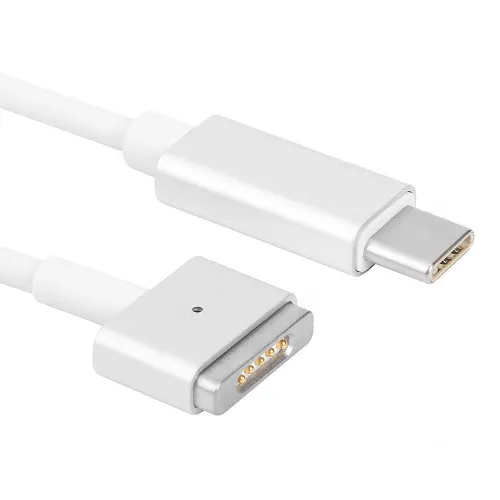
Indeed. I've had my XCover 6 for 3½ years now. I've dropped it many times, on hard surfaces (like outdoor concrete/brick). I've undoubtedly been fortunate. the plastic has gouges in it. there's (small) scratches on the screen (some from my keys), but the screen is not cracked. When it is dropped the back and battery pop off, which I think helps dissipate the forces. BTW, for anyone trying to extend their phone life, I strongly recommend those magnetic USB connectors. Reduces wear and tear on the USB port, and is also kinda convenient for quick disconnect.
> I strongly recommend those magnetic USB connectors
Note that these connectors are in violation of USB standard and potentially harmful as they expose the pins in an unintended way. For instance, notice that all the connection on the USB port are not all the same length, it is a form of protection, to make sure the power lines are well connected before the data lines make contact. With magnetic USB connectors, you lose that feature, in addition to potential issues with ESD, short circuits, etc...
I have a friend who swears by them and never had a problem, but still, that's good to know.
> notice that all the connection on the USB port are not all the same length, it is a form of protection
This was noticeable on USB-A connectors when you look closely where the two outside pins were slightly longer than the two inside pins: the Make-First, Break-Last (MFBL) principle. You can also see the same thing on SATA edge connector pins.
Take care googling for photos because many are CAD mockups misinform (because they are drawn pretty incorrectly and show no physical length differences).
USB-C does have longer pins for the ground, and the CC (configuration channel) connects last. A USB-C host doesn't deliver power until it is negotiated using the CC pins.
So USB-C via a "magsafe" connector is safe.
But maybe look for the two outermost pins to be longer.
You mention ESD which could be riskier since charged fingers or worse could touch contacts directly. However the lip around the contacts is usually grounded so any spark should be grounded first. I would also assume modern electronics are well protected against ESD (nobody wants occasional undiagnosable failures leading to refunds). Sure that stuff from earlier this century wasn't so well protected. YMMV if you are a sparky person in a sparky environs: weigh the downside costs of different approaches appropriately.
At least the USB-C ones I purchase are not flush - I never found those to be reliable. It's a male prong that looks pretty much identical in wiring to the male prong on the phone, that connects to a female one plugged into the socket. That plus a bit of a collar to help hold it in place. So I don't see why there would be any difference in grounding, it's the same connection...
(that plus the comments from the more knowledgeable person below)
Eventually they start wearing out, and I just replace them. I've had no issues with high voltages (45W+ charging on phone and steamdeck) and with peripherals (hub for example).
You want to get everything grounded before the data wires connect. But that's more about the shroud than the pins as far as I understand it, and a magnetic connector could ensure grounding if it was designed to do so. And for charging purposes you could skip the data wires entirely.
Oh yeah so it's utter trash and not worthy of our attention. Imagine carrying a whole 58 grams more, during a whole day, impossible for the average tech worker's atrophied muscles
The point is that people have different preferences, so the EU should not force people to buy phones with removable batteries. People who want such features can buy those phones, and people who want smaller, thinner phones can buy ones with integrated batteries.
At most the EU should tax externalities like electronic waste, though that would be a rounding error compared to the cost of the phone itself.
Phones with removable batteries are rare because only a small fraction of people want phones with removable batteries. Phone manufacturers also dislike removable batteries because customers buy cheap 3rd party batteries and complain when these batteries perform poorly or malfunction, sometimes by exploding. And then the headline is, “Phone made by company X explodes.” not, “Cheap battery explodes.” Removable batteries also introduce new failure modes like contacts degrading, causing phones to power off unexpectedly when jostled or flexed in certain ways. That increases the risk of a recall and bad PR.
I and millions of others want a phone that is smaller than the current offerings. Heck, my 13 mini is too big for my tastes. But I don’t think that means the government should force phone manufacturers to make smaller phones. So too for features like removable batteries, physical keyboards, or headphone jacks.
What do you mean by "rare"? You just click "order". It's not like you have to go on the quest for the lost arc or anything like that. They are uncommon in the sense that people don't actually get them, but that's not because of a lack of availability. People do not want them.
They mean the models are rare, not the devices. The claim is if you want feature X + removable battery, it's unlikely that you will find it. People's willingness to forgo the battery for feature X therefore doesn't tell you if people care about removable batteries in an absolute sense, just that they care relatively less than they do about feature X.
You could argue that the market already reflects people's desires via, eg., Apple's market research. They could argue that democracy in the EU also reflects people's desires.
> The point is that people have different preferences, so the EU should not force people to buy phones with removable batteries.
There are many food additives with very useful properties, but health effects. There are many perfumes too where the original formulation had a particular compound layer found to be carcinogenic.
Regardless of whether an individual prefers to use such compounds at their own risk or not, large companies will use whatever is the cheapest ingredient for their product.
In some cases, that's better for the consumer - who, often, has almost zero choice.
(And if you think you truly have choice as a consumer, I challenge you to use a phone that isn't running either Apple or Google's code.)
I not sure how much we’re disagreeing here. Applying my argument of taxing externalities to certain food additives would result in taxes so high that it would effectively be a ban.
The externalities of integrated batteries are that people probably replace their phones sooner than otherwise, resulting in more electronic waste. But phones are only a tiny fraction of e-waste. Most e-waste is from household appliances, displays, & HVAC equipment. Phones are less 10%. I mean, how could it be otherwise? Phones are small and people use them for years before upgrading.
I’m not sure what the Android/iOS duopoly has to do with removable batteries. Mandating removable batteries would not change the operating systems available. And while there isn’t much choice in which OS you can run on a phone, there is enough choice that you can buy phones with removable batteries. If anything, this is an argument against mandating removable batteries, as governments are not mandating/subsidizing another phone OS despite far less choice in that area.
Lastly, I don’t see how banning people from having phones with integrated batteries gives them more choice. Most people (such as myself) don’t really care about removable batteries, and would rather have a phone that is smaller, cheaper, and/or more resistant to the elements. The way to give people the most choice is to tax externalities commensurate to the harm they cause, and let the market figure out what people actually value.
My point or argument isn't that customers have absolutely zero choice, but that there are very few options out there.
If (phone) OSes were truly healthy free markets, there would be a lot of healthy competition. Even cars and automobiles (which still are almost oligopolies, as it's extremely hard to compete) have more options.
I said that sentence primarily as counter to anyone who thinks the mythical "free market" is a panacea to all ills, as many anti-EU folks often have such a view. I was trying to demonstrate that an unregulated market is (very) often unhealthy, and can paradoxically can result in viewer choices.
Sure, but it seems like the person I was replying to doesn't even consider two options to be a choice, so perhaps their choice framework has obscure criteria that you or I haven't been able to grok. That's why I asked.
This has been repeated so so many times... How can you be sure that throwaway glued-together phones are thinner and lighter than repairable phones.. If there is any source of this information, it's vendors who have interest in phones being non-repairable so they can ship more units...
How about vendors get on their asses and design thinner and lighter phones that are not e-waste from the moment they leave the factory?
I bet you when forced to make the right decision they can go even thinner and lighter than the current flagships...
For that matter, I put a chonky case on my phone anyway... would rather have a sturdier phone that doesn't need an additional case that has the features I'd like, including an easily replaced/swapped battery.
Beyond this, hell, make the "internal" battery solid-state with minimal capacity and have an external power pack from the get-go as part of case designs. Get the size of battery you want... if you want a big booty phone with battery for days, you can get it.
That assumes that the market itself is actually "free" and consistent and that there are no bad actors in the mix, and upstarts are allowed to freely start and compete. Given the regulations in the space that is emphatically not so.
Incumbents will remove and enshitify a number of features in order to maximize returns... Your new clothes dryer has a 10 year mechanical warranty.. but the control board isn't covered, will die in 12-24 months and won't be produced again. Oh and there's some clunky DRM in the mix on top. Guess you get to buy a new dryer, but this time you'll go with $OtherShittyBrandThatDoesTheSameThing.
Aren’t newer washers/dryers full of electronics because of laws mandating higher efficiency? My parents have an old Maytag washer that uses around 30 gallons per load while my washer uses less than 8. I know Speed Queen makes dumb laundry machines, but at least one of their models was banned for residential sale by the Department of Energy. They ended up figuring out a workaround by gimping the default cleaning mode and encouraging users to not use that mode.[1]
But I don’t see how mandating removable batteries helps this situation with phones. I don’t replace my phone when the battery degrades, as it’s pretty cheap & painless to replace the battery after a few years. I upgrade when my phone stops getting security updates, or when a new phone comes along with some feature I want.
I'm mostly with you.. my hope is to see more options with swapable batteries... I used to keep one on the charger and the other in my phone, then just swap them out when I leave the house. Not any time recently, but up until android/ios became pretty common.
Earth's resources are finite, both in terms of raw materials and ability to absorb pollution. Stewardship of our resources entails the regulation of the things we create with those resources such that our collective consumption is conserved. Such oversight is both prudent, and as history and global outcomes teach, quite necessary.
I don't disagree with your statement, but an increase in design durability also does those things. A phone that you can drop and it doesn't break creates less pollution than a phone that you can drop and replace the screen.
E-waste is a minuscule rounding error compared to all the other forms of environmental destruction modern industrial civilization causes. European countries are massive polluters and net carbon producers (though not quite as bad as the US); e-waste shouldn't even be on their radar since it is a distraction from almost infinitely more important environmental concerns. People complaining about this don't actually care about e-waste, they just talk about it because it's convenient for their argument.
Excellent job!
How did you approach the licensing matter, as in order to customise Windows installation media and in order to be compliant with licensing terms one needs to solve (and pay for) this non-trivial puzzle if it can be solved in the first place: https://download.microsoft.com/download/3/d/4/3d42bdc2-6725-... ?
I guess Microsoft has to make money somehow, but it's not funny. And the worst thing is that you somehow have to magically know this.
You should speak with your lawyers for concerns about licensing.
I'd note that the installation media was not modified (the DVD ISO provided by Microsoft was used unmodified), only the preinstallation media was modified (governed by ADK license).
As an individual installing onto one machine already licensed, I'm not really worried here.
I really wish that OIDC / Oauth(orization) would be less confusing from user experience and security perspective.
What I have in mind - I'd say only very small population understand that OIDC / Oauth(orization) is about granting access to a service to access your data. Meaning once you have approved service (lets say Dropbox), now Dropbox can access your data on your google account (this of course depends what exactly dropbox asked and if you clicked on "approve", but most people do click as they want to login to Dropbox via their Google account).
SAML is better, as it can be defined at Google side what data is being sent to DropBox when Single Sign On happens and DropBox cannot access your google data as it sees fit.
SAML ain't perfect either because there's no practical way to "sign me out everywhere"
Interesting. For example how would one find a "new" Tool or Deftones? Current algorithms probably don't "pick up" not-yet-so-popular things. For example Shelton San (I found out about them via word-of-mouth), although I'm frequent user of Spotify.
This means that classical promotion channels are still necessary, as otherwise things get lost in noise.
I noticed that Spotify surfaces similar artists who are also of a similar popularity. So it's not like it doesn't understand that particular style, it just has to somehow pick a couple of dozen artists to show in that very coveted spot.
So what worked for me in the past is finding less popular artists and then checking their similar artists.
This sounds like a complaint with Google's implementation, not with OAuth in general. The correct scopes should limit information sharing to the user's profile. All of the security and privacy concerns that necessitate an explicit user interaction apply to SAML too.
That's the thing - authentication capability is basically sideeffect of Oauth/OIDC.
SAAS x can request whatever they want via OIDC and then user can either accept it or decline it. This is protocol, not google specific matter. Ask ordinary user how they understand what is being asked from them when they are trying "to log in" via OIDC/Oauth.
With SAML it's the other way around - administrator chooses what is being sent to SAAS x, user does not need to decide anything nor do they get hard to understand prompts.
I'd say the main difference is that OAuth is granting the SP the ability to "do stuff" as the original user (including reading the user's profile details, as OIDC does), as opposed to SAML's approach of just sending attributes describing them.
For what it's worth, it is certainly possible for SAML SPs to flag that certain attributes should/must be released to them via their metadata, but the actual release is at the whim of the IdP and its operators. It's also possible for a SAML IdP to expose that level of detail to its end users and allow them to agree/disagree to the attribute release, although I'd be surprised if that behaviour was particularly common in practice.
The difference between OIDC and OAuth boils down to exchanging attribute assertions describing a user as opposed to the delegation of a specific set of allowed actions, as OAuth was intended to do. OIDC and SAML are basically the same thing, with OIDC being a somewhat less frightening and more modern protocol.
Reading the user's profile information _is_ the delegated action. OAuth providers were already doing this prior to OIDC but in incompatible ways. OIDC standardized how that information is requested and returned.
Should, but don't. OAuth2/OIDC implementations tend to be way more transparent about the asks being made between an IdP and SP. It can be confusing. (I agree, however, it's the right path.)
You can't compare OAuth with SAML. OAuth is authorization and comes only ever after authentication, which is OIDC.
But to respond to your critic: It is good that apps let you know that you are IN FACT not merely logging into something, but grant that app access to your Google Drive. This is a very important information! Imagine your mom signs into ClashOfClangs (a malicious clone) and the IdP would in fact NOT tell your mom that the app will have access to all her files because it may be confusing
Would be great if chromeos flex would start supporting organisation provided wifi credentials - currently only device generated keys are an option, meaning one has no idea whatsoever if keys generated are actually good enough or are just looking random while generated might be generated predictably. No idea, as it's a black box. Allow organisations to generate keys off device and allow these to be uploaded to the device, and then we can start considering it.
The other problem is that other vendors do not provide chromeos versions of their tools. Looking at you Fortinet and your vpn.
When has the switch been toggled though and how can I know in each implementation?
1. Is it when I pushed the toggle, regardless of when animation finishes?
2. Is it when the animation finishes
This is necessary when flipping many toggles on one page and it needs to be done many times over. In case there's no animation, it simple and clear. In case there's animation you need the know is it case 1 or 2. If it's case 2 it will additionally slow you down as you now need to wait until all animations lengths * number of switches toggled has finished.


reply