For me, this remains one of the most interesting studies in literary imagery, and one that only gets more interesting with time. By the 1990s, of course, TVs tended to show an RGB#0000FF blue when given an unusable signal – something which itself has largely died out over the past two decades with modern TVs reverting to black instead of blue.
And yet... there's no mistaking the visual evoked by these opening lines. Even if you didn't grow up with over-the-air broadcast TV on a cathode-ray tube, the words "dead channel" are equally of their era and ground the book in its analog-and-early-digital milieu. The real timelessness comes in the juxtaposition of old, malfunctioning electronics and the natural environment: a pitch-perfect image to introduce the world of the Sprawl.
I don't live in the US and I never saw a dead channel on TV in the 90s. As I read your comment I suddenly wasn't sure which was meant anymore, so I found this on Reddit:
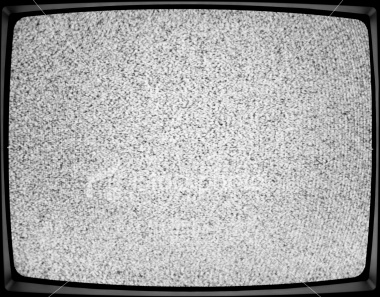
> Gibson imagined an ancient TV ... that grey/green haze as the tube warmed to a channel that was 'active', but sending no programming. A 'dead' channel.
> Most kids in the 90's imagined the static of a TV of THEIR childhood, when not tuned to any channel, just projecting a grey/white static. Gibson has often corrected people that this was NOT the 'Dead Channel' he was referring to.
> Now, of course, a new generation is imagining a sickly bright blue ... probably the last generation to really know what a 'TV' is, when it connected to something called a 'channel'.
If you like this kind of richly visual writing you should really read Blood Meridian by Cormac McCarthy. It is a deeply unsettling book but it's an absolute literary masterpiece.
It took me three attempts to make it to the end, because the violence is so... much. But once you manage to ... let's say "transcend" that, it is a very rewarding experience. I absolutely adore how McCarthy manages to evoke such graphic imagery with such sparse prose (both the violent parts and the landscapes), plus the Judge just has got to be the best antagonist in the history of literature.
And the ending has a certain magic I have not found words for. Strangely serene. I suspect there is some symbolism or reference I am missing.
Gibson discusses the opening in the foreword to the latest edition of Neuromancer [1]:
"It took at least a decade for me to realize that many of my readers, even in 1984, could never have experienced Neuromancer’s opening line as I’d intended them to. I’d actually composed that first image with the black-and-white video-static of my childhood in mind, sodium-silvery and almost painful—a whopping anachronism, right at the very start of my career in the imaginary future.
But an invisible one, interestingly; one that reveals a peculiar grace enjoyed by all imaginary futures as they make their way up the timeline and into the real future, where we all must go. The reader never stopped to think that I might have been thinking, however unconsciously, of the texture and color of a signal-free channel on a wooden-cabinet Motorola with fabric-covered speakers. Readers compensated for me, shouldering an additional share of the imaginative burden, and allowed whatever they assumed was the color of static to take on the melancholy of the phrase “dead channel”."
This comment makes me feel old. I immediately knew he was talking about static, but I suppose if you didn't grow up with pre-digital terrestrial TV, you wouldn't be familiar with that.
as remarked on in homage by Neil Gaiman in Neverwhere:
> The growling was the roar of traffic, and he was coming out of an underpass in Trafalgar Square. The sky was the perfect untroubled blue of a television screen, tuned to a dead channel.
I think this first sentence is my favorite part of all of Neuromancer and my favorite opening sentence of any novel.
Neuromancer didn't seem so earth-shattering to me when I read it. Cool but not overly engaging, I guess. I was quite young when I read Neuromancer and I want to read it again though, to see if I can get more out of it.
I’m in my 30’s, and read it for the first time this year. I thought it was amazing. More amazing than the book itself was all the influences on pop culture I encountered as I read it. I think as great as the book is it’s influence has been far greater.


Writing doesn't get any better than this. From this line onwards I was and always will be a Gibson fan.
His latter works are less impressive though, I think.