I once saw an accident where a cyclist going straight through an intersection was hit by an oncoming truck turning left that was impatient, didn't see the cyclist and gunned it between cars. The cyclist was launched headfirst into the bumper of a car stopped at the light and her helmet loudly cracked in two. She was still hurt, but I'm sure she would have died without that helmet.
If some riders choose to not wear a helmet, that may be fine, but prohibiting helmets is irresponsible. Riders have a much higher cumulative risk of accidents that are not their fault than customers. It's a workplace safety issue.
Background: I do downhill longboarding as a hobby.
> If some riders choose to not wear a helmet [...]
...we take their board from them, until they show up with one.
This sport is almost completely unregulated (outside of official events), but somehow the community has developed an incredibly strong culture of keeping both yourself and the others around you safe. I guess something about being a niche sport, perhaps a bit of natural selection.
If e.g. a sponsor (hypothetically - I'm nowhere near good enough to get sponsorship) told me not to wear any particular piece of safety gear, I'd laugh them out of the room, and likely the entire local crew would join in the laughing. It's a small sport, once the word gets out, that company would also likely no longer be getting many sales either.
The only correct move for the Pedal Me riders is to go pedal for someone else.
What do you suppose happened to the rest of skateboarding that pushed it in the opposite direction?
Watching the olympics this summer, it was amazing to watch the street skating events with none of the competitors wearing any sort of protective gear. And it’s not like they didn’t need it either. They were getting wrecked in falls to the point where some of the couldn’t even finish the competition.
It was nuts watching it, since my last exposure to the sport was from the 90s where Tony Hawk would be padded out to the nines while standing around giving an interview by the side of the park.
What is going on that made helmets so uncool that you wouldn’t even wear one if you knew you were going to fall on your head?
You wouldn’t generally exceed 15mph street skating. Competent downhill skaters can reach 50mph+, with world record speeds exceeding 80mph.
That alone makes safety gear much more essential for downhill.
In addition, if someone shows up to a spot without adequate gear, crashes and badly hurts themselves, it can cause the spot to be blown for other riders. Downhill skateboarding is much easier when you’re on the good side of local residents and police.
Also, since DH communities tend to be very small and tight-knit, if someone gets hurt you hear about it. I’ve personally witnessed multiple incidents leading to broken spines, countless minor injuries, and have had one friend die while skating. Either you take safety seriously or pay the piper.
There are more factors than this, would probably make for an interesting sociology dissertation.
I watched an old guy die in a parking lot because of this. His hat blew off, he bent over to pick it up, and then fell forward onto his head. He died soon after. Now, he could have had some kind of other issues leading to this (he was elderly and had mobility issues). My wife parked while I ran over to render assistance, I called 911 while a military medic tried to revive him but it was too late.
So yeah, that can be enough (might have been a heart attack as a result of the shock, I am NOT a doctor, but he was gone by the time the ambulance arrived).
Also, one of the reasons street fighting is so dangerous has nothing to do with MMA dudes, it's when someone falls down and hits their head. This happens all the time. They sometimes die from the fall.
Sheckler has done bigger and many kids do more than 17ft drops for fun. When it comes to falling in street skating there is a certain pattern to falling and knowing how to “fall correctly” almost like stuntman do without helmets in movies all the time. Stuntman do sometimes wear padding, but not always.
Bombing a hill is very different from skating a stair set. The speed at which you do tricks is manageable to be able to tumble your body correctly if you fall (and you’re ready for that fall usually) but bombing a hill is an enormous amount of speed and you can’t prepare yourself for an unknown rock that throws you off.
That’s another somewhat important difference too with street skating, for big tricks you triple check the area and often sweep it because of those tiny rocks.
So context does matter. I’m not advocating against helmets but these are incredibly different things.
Edit: and fwiw I’ve hurt myself far more bombing hills than I have skating something like the big four in ATL. Notice how they fall: https://youtu.be/Ban0D24Aip4
(And the reason they aren’t making this trick is ironically they are not going quite fast enough)
Edit 2: and because I’m reminiscing a bit, the big four is hard because the run up is pretty short. You need good bearings and small wheels to gather the speed required. The only time I’ve ever seriously hurt myself in 15+ years of skating was doing a dumb trick in a standing position. Helmets are important for things like vert for sure where it’s lots of speed and lots of height, and if my kids and I go out and skate we wear helmets (they’re small and I want to set a good example). But most of street skating can be treated as though you’re a trained stuntman (because you basically are)
Agreed. For what it’s worth, I think street skaters should wear helmets most of the time.
The 17ft drop is equivalent to the 80mph example in my post, and should definitely involve a helmet, gloves and impact padding (which can be worn under clothes).
> What do you suppose happened to the rest of skateboarding that pushed it in the opposite direction?
Widdershin's response is excellent, but I'll add a bit more context: the physical similarities between a skateboard and a longboard are very superficial (we can barely trade any hardware at all); that extends to the respective communities, which also have disjoint histories.
Longboarders trace their roots to surfers; likely someone bored of waiting for a good wave has put skateboard trucks on their surfboard. Some niche longboarding cultures/disciplines were inspired by surfing/SUP (surfskate, pumptrack, land paddle), and one major longboarding discipline is a lot about moving on and around the board ("dancing" on it).
In these other longboarding communities (perhaps except pumptrack), you will see people using helmets and other safety gear much less often, and it's probably fair. But I've never, ever been dissed by any of these people for wearing a helmet, even if just cruising.
anecdotally, am a daily skateboarder and long time snowboarder who is guilty of having an ego, and even wear pads to protect a couple massive contusions (swellbos) but i never wear a helmet, so ill frame it like this: 95% of the time i am not that much at risk for serious head injury when skating, and even though i take it for granted, there is an element of knowing how to fall/bail early and skating just within my means.
however on a snowboard, i am much more acutely aware of the consequence -- my casual and super comfort "resting" level is like 25-35+ mph, which is a car accident, which is almost always a threat for serious head injury.
there is a huge difference between tripping at about walking/jogging speed and hitting your head versus at 35mph, and this realization happened after 15 winters of safe riding without a helmet.
the reality is, i am just not that worried about it -- ego or no ego, except when i snowboard, which i will not do without a helmet anymore.
Before 2009: very few adult skiers in Austria and Germany wore helmets, pretty much only the racers and children who were legally required to. I felt like a dork wearing mine, but I experienced a scary near-miss my first season on these relatively crowded slopes.
After 2009: at least 80% of adult skiers in Austria and Germany wear helmets, from the looks of things. Most frequent non-wearers are very old, permanently tanned Austrian men who literally have 5000+ ski days behind them or young ladies with nicely-done hair and make-up much more interested in getting good pictures for Instagram than actually skiing.
What happened in 2009? The Ministerpräsident (think US state governor) of Thuringia, Dieter Althaus, was flying down a black (expert) slope, turned onto a blue (beginner) slope with enough momentum behind him to go up it and crash into a lady from Slovakia.
He was in the hospital for weeks, living to earn a criminal judgment for negligent homicide, paying tens of thousands of Euro.
She died on the way to the hospital.
He was wearing a helmet.
She wasn't.
The absolute crush of helmet sales then and continued rates since are sometimes called the "Althaus-Effekt".
That's also the year Natasha Richardson died from a head injury she received while skiing. That was all over the news (at least in the US/Canada, and probably England).
Interesting. I wonder if these 2009 events were a turning point worldwide. I recently returned to downhill skiing after last skiing in the 90s, and was absolutely shocked by the number of skiers wearing helmets. Like 90-95%. Whereas when I skied as a young man in the 90s, it was something like 0-2% (basically only a handful of children). The skier side of my brain still can’t get used to the idea of wearing one of these ridiculous things, but then again the logical side of my brain points out that I wear a helmet while cycling so it makes sense.
Almost everything else about downhill skiing is pretty much the same today (the skis are shorter and fatter for some reason), but the helmet wearing was a massive sea change that happened without me.
I cracked two helmets hitting my head on iced slopes. Every time I was able to stand back up (although dizzy and with a headache) and bless my initiative to wear a helmet. As they say, your mileage may vary.
Protective gear was always uncool in street skateboarding. Vert (Tony Hawk's main discipline) was the exception. From what I understand it's about being counterculture, punk etc. Today even bowl riders mostly don't wear helmets or pads, and crashing in a concrete bowl is arguably even worse than on a wooden ramp.
But it totally does matter when you fall and smack your elbow. OP mentioned that bowl skaters are wearing no protective gear (pads/helmets), not just talking about helmets.
It’s a style thing (as dumb as that is in practice).
You just don’t look “cool” switch back smithing down hollywoood 16 wearing a helmet.
I skated a ton growing up and it was beaten into you at skateparks how dumb you looked wearing a helmet. No major head injuries but definitely had some close calls. I look back and cringe and how stupid that was.
You could have the best designed city in the world and you will still be at a high risk of your fragile brain case impacting the ground or something worse at speed. Whether you're pedaling down a country road or the busiest NYC intersection not wearing a helmet on a bike is stupid, full stop.
In the Netherlands we're doing fine without them though. Nobody wears one on a regular bike.
I've had a few times where I slipped so fast I didn't even remember what happened but every time my arm was there protecting my head. Reflexes are awesome.
Accidents can happen sure but the added hassle doesn't seem worth it. Of course things are different when you do high speed cycling or mountain biking.
"In absolute terms, more people were killed in a car accident (237) than in a bicycle accident (203) last year, but this is different per kilometre travelled. Traffic mortality per billion vehicle-km was much higher among cyclists than among passenger car occupants (11 versus 1.6 deaths)." (https://www.cbs.nl/en-gb/news/2020/31/decline-in-road-fatali...)
Is it as much about vehicle-km or per vehicle-km? At the end of the day people generally will avoid super long trips on a bicycle because it’s slow and strenuous.
There are a lot of ways to slice those numbers; I like deaths / km as it describes the risks of traveling from point A to point B by various methods. On the other hand, it's likely skewed somehow by the fact that you rarely have more than one fatal accident per trip.
Another way of looking at it is deaths / trip; a quick search shows 4,800,000,000 bicycle trips in 2019 for a rate of 48 deaths / billion trips and 229 deaths versus 3,600,000,000 car trips and 610 deaths or 169 deaths per billion trips.
The average trip length in the US is apparently something like 10-15m which might make the number of automotive deaths per billion trips something like 130-200. Maybe. (I can't find an actual estimate of the number of trips.)
Another way is deaths per population, see one of my other comments.
Thing is, cyclists don't need to rack up as many kilometers as drivists. If you're riding a bike, you probably live in an urban place and you need only bike short distances.
Well, obviously cyclists are more vulnerable. Considering that the numbers are pretty low IMO. The Netherlands have 16 million people, most of which use bicycles for daily travel. 200 died in a year, especially elderly who are exceptionally vulnerable. It's not something that warrants extreme worry. There's always risk in a life.
Also, it's something that is only a risk to the rider themselves so leaving it to their discretion is warranted IMO.
Dividing fatalities by population might be reasonable to look at acceptable death levels; in NL in 2020, that's 229 / 17,440,000 or 1.3 per 100,000. Automotive numbers would be pretty similar.
(Correction: They would not. There were ~610 auto deaths in NL in 2020. That gives 3.5 per 100,000.)
In the US, 2020 had 11.7 automotive deaths per 100,000 people and 0.38 bicycle deaths per 100,000.
In the Netherlands normal cycle commuters almost never exceed 15 km/h. But I keep watching some Dutch road cycling youtube channel and they all wear helmets.
No, I mean they all wear helmets. Cycling as in road cycling, group rides, as a sport, not for transportation. They're not professional cyclists, they all have other jobs.
I think they use those for aerodynamics also. But yeah they turn up in spring and summer. Not much outside those seasons.
I find them very annoying, they tend to be very inconsiderate. Cycling on the road where bike lanes are available, and when they are on the bike lane they tend to be agressive to normal cyclists if they don't move along as fast as they want.
They're not all like that but many of them are, which leaves a bad taste as soon as you spot these groups of wannabe lance armstrongs :P
I don't think helmets are worn for aerodynamics. IIRC professional race cyclists only started wearing helmets after in 2003 when they became mandatory. If there had been any advantage in aerodynamics the athletes would have voluntarily picked up helmets before.
Also, anecdotally, I am occasionally road cycling for sports and do wear a helmet at all times. However, I am certainly not doing that because of aerodynamics.
And cycle commuting is part of the culture which probably makes it safer as well. Would wearing helmets make it even safer? Possibly. But one can always argue for incremental safety gear and processes.
Making helmets mandatory would probably discourage cycling. That happened in Australia at some point, and nobody wants that to happen here.
That said, some cyclists here seem to be downright suicidal. Helmet or not, if you run a red light against traffic while watching your phone, you don't seem to be very attached to living. I've even seen parents direct their kids into ridiculously dangerous situations. Fortunately car drivers pay attention even to stupid cyclists here.
Isn’t the Netherlands very flat? I would probably feel safe without a helmet if it weren’t for the hills. My usual ten minute ride has an elevation difference of 35 m.
That's kinda the point. People can bike under very different circumstances. If you're going at breakneck speed down a mountain trail, you definitely should wear a helmet. But if you're going at a leisurely pace through well-designed traffic, it's not nearly as vital.
And it sounds to me like Pedal Me wants its riders to ride at a leisurely pace, rather than breakneck speeds.
>I've had a few times where I slipped so fast I didn't even remember what happened but every time my arm was there protecting my head. Reflexes are awesome.
isn't this a good example of confirmation bias? it worked for you, so it must work for everyone the same as it did for you each time they require it.
its your brain, I guess. and you do have that social health network to cover you when medical issues arise. guess it doesn't matter your quality of life post-brain injury :-)
You can also trip on the stairs or a curb and smash your brain yet we don't wear helmets and armor to take a walk or climb some stairs. Apparently 30k-40k people a year die from stuff like that. (based on a quick google search so no idea if it's low or high)
What body/head armor are you wearing when you take a shower?
> A study conducted by the Consumer Affairs Agency based in part on these statistics estimates that around 19,000 people lose their lives every year in accidents while bathing
Your odds of dying as a pedestrian appear to be 7x more than cycling. Why are you not wearing armor while walking? Clearly it's irresponsible not to.
Are you ready to live in a society where it's expected you'll wear a helmet except when sleeping? You certainly don't want to be one of those people that slipped in your house and died. I don't. But, I'm also not willing to wear a helmet just to exist.
Am I stupid? In 2050 will everyone be wearing helmets for walking and people like me will be considered needlessly risking death for not wearing one?
Even well-maintained streets can get potholes, especially after huge weather swings. I once hit a pothole while biking and somersaulted over the handlebars. I landed on my back, but a slightly smaller rotation would have me in the hospital, or worse.
Don't you think it's a little hypocritical to force everyone to draw their acceptable risk line at exactly where you happen to draw it?
Longboarding is risky, downhill longboarding is riskier, doing it without a helmet slightly moreso, doing it naked probably slightly moreso.
Why is it okay for you to set the acceptable risk bar and steal boards from anyone that doesn't agree? Should people that think that downhill longboarding with a helmet is risky steal your board?
> Why is it okay for you to set the acceptable risk bar and steal boards from anyone that doesn't agree?
For the same reason we enforce seatbelts in cars: Enough people died. Then those who saw them die decided on these rules so we don't need to go through the same pain. The fact that you don't get this shows that the rules work.
Interesting you should bring that up. That was used as an example of unintended side effects of policy in my economics class, because when people started wearing seat belts, they drove faster and more recklessly, so while the seatbelts protected people inside the cars, the number of pedestrians hit by cars went up.
In 1995, there were 2,423 billion vehicle miles traveled; in 2009, 2,957; in 2019, 3,248. Doing the division, that works out to 2.3 pedestrian deaths / BVMT in 1995; 1.4 in 2009, and 1.9 in 2019.
The seatbelt thing is somewhat illogical. Like if that's the level of risk we deem acceptable for society then things like wingsuit diving and probably even motorcycles, longboarding and bicycling on city streets should also be illegal.
Especially if measured by any objective metric like fatality risk per passenger mile.
This is an imperfect process, and there's a balance to be made. Sure, we can be too paternalistic, and putting too many onerous restrictions on things (or on banning things outright that people have a reasonable desire to do). I think banning motorcycles would fall under that. Sure, riding a motorcycles is far more likely to get you injured or killed than riding in a car, but I think most people would consider banning motorcycles to be too extreme.
It's not fully objective. We're emotional humans, and that's ok. We're going to do things that are risky, and some people are going to get hurt or killed doing them. But that doesn't mean we should just throw up our hands and give up. We can still make it less likely people will get hurt doing those activities by requiring some safety measures must be taken.
Alternatively the control could be given to insurance companies. For example you get a lower deductible in an accident if you're wearing a seatbelt (or bike helmet or whatever) compared to if you're not. Insurance companies actually calculate the risks/costs, as opposed to governments cramming something resembling moral judgement (or just blindly perceived risk reduction) as law.
It's certainly a slippery slope. You will find people who object to "their taxes" being used to do search and rescue, provide wilderness medical treatment, etc. for activities that they consider unreasonably dangerous, e.g. winter hiking up even fairly moderate mountains.
You ruin the roadway for responsible users by maligning the good name and reputation of your fellow riders when you do so.
I mean to say, riders overwhelmingly want to be safe and it seems to be both self-selecting and self-reinforcing. Outlaw riders are free to ride alone.
Unregulated sports like this are a delicate thing. It’s up to the participants to self regulate and avoid catching the public eye so they don’t lose access to the areas they get to enjoy. This is a huge thing in FAR 103 sports (ultralight flying). Unregulated doesn’t mean “do whatever you want” it means “we’ve given you some leeway here don’t mess it up”.
In this example, If people start getting hurt on a hill - sooner or later using that hill gets banned.
> Don't you think it's a little hypocritical to force everyone to draw their acceptable risk line at exactly where you happen to draw it?
I always find takes like this a little weird. This is something we do all the time in society. Seat belt laws. Bicycle and motorcycle helmet laws. All sorts of safety regulations and laws around sports, transportation, health, etc.
We as a society often decide to "protect people from themselves". Some of it is out of an understanding that humans are notoriously bad at risk assessment and will do unsafe things. Sure, that's a bit paternalistic, but... that's life. But some of it is also because severe injury and death don't just hurt the person injured or killed. The emotional toll of those effects are felt widely. The economic effects are felt widely too.
Certainly there are lines to be drawn, and there's plenty of reasonable debate as to where those lines should be drawn. Some possible safety measures might be very difficult, burdensome, or expensive; sometimes in those cases we can't require things like those without causing other types of harm. But others... not so much.
> Why is it okay for you to set the acceptable risk bar and steal boards from anyone that doesn't agree?
Because it's not just about the individual in question. It's about the entire community. The community of longboarders don't want severe injury and death on their hands, so they develop social norms that include requiring helmets. That's entirely within their right to do so, as it is their right to ostracize those who do not conform. (For the record, I think "steal their boards" was hyperbole. I doubt people's boards actually get taken. I expect it's more likely that they get shunned and ejected from the community.)
> Should people that think that downhill longboarding with a helmet is risky steal your board?
If the community consensus is there, then maybe that's reasonable. (In the "eject from community" sense, that is, not necessarily the literal "steal their board" sense.)
Certainly all of these sorts of decisions should be based on research as to what actually makes people safer. Humans are imperfect and don't always follow the science, but the hope is that, on a long enough time scale, with enough people weighing in, we'll get it right most of the time.
> Why is it okay for you to set the acceptable risk bar and steal boards from anyone that doesn't agree?
If it is a group activity the group sets the acceptable behaviour. Don't like it? Demand your board back and go play with another group, rather than expecting this group to accept your risk assessment which doesn't agree with their's.
This is especially true if the group is in any way more formal than a bunch of people arbitrarily meeting up.
Somewhat unrelated but in car culture aftermarket safety gear like roll cages, bucket seats, racing harnesses, HANS and helmets are seen as cool and badass. It's a good sight.
Though there are some problems, like if you start running the race safety gear, you need to go all out--you can't have a bucket seat and a race harness without also using a helmet and HANS, your head is vulnerable, and if you run a roll cage without a helmet your head is vulnerable. But in race events a lot of people run "cool" safety gear and people have a good attitude towards it.
What does down hill long boarding have to do with low speed cycling? A bike 15-20mph is much closer to a runner (5-10mph), than your sport (50+ mph). You gonna stop people from running without a helmet?
Their underlying point is we don't have a major problem with people falling off their bikes randomly, we have a problem with multi ton vehicles slamming into bikes and pedestrians. Did you know most bike helmets (not motorcycle ones) aren't tested for the force of car/truck hitting a bike? We need to stop pretending that if people put a helmet on their safe and we can go back to our lives. We need safer separate infrastructure, and if we had that you'd probably not worry so much about helmets.
Coffee and tee are not mutually exclusive. We need better infrastructure, better (cheaper, lighter, stronger) safety gear, AND to call out anyone who thinks you're safer sailing without a life-vest.
Ok, so what you are saying appears to support Pedal Me's position as reported in the article. They say: (a) wearing helmets encourages risky behaviour; (b) the added risk of accidents outweighs the increase in safety during an accident. You are giving an example of a community who only engage in a dangerous activity if they wear helmets, supporting (a). And I imagine you would agree that you are less safe wearing a helmet and going downhill longboarding than not wearing a helmet and not going downhill longboarding? If so, that supports (b).
It's not a conclusive argument, of course, and I have no axe to grind on this issue. It's just that I think that you might not have taken in to account what they are saying.
By this logic, there should be no life boats on ships.
> And I imagine you would agree that you are less safe wearing a helmet and going downhill longboarding than not wearing a helmet and not going downhill longboarding?
And by this logic, we should just never leave the port.
The case for helmets on bicycles is less clear cut than it is for more dangerous forms of transit such as downhill longboarding. Among other things it makes car drivers drive more dangerously around you, but it also changes much more common and less dangerous accidents into more dangerous ones. Taking a tumble on a bicycle is generally not fun, but getting your neck twisted due to a helmet isn't improving things.
Of course I come at this from the perspective from a country where there's more miles of cycle lane than miles of car-only roads. Who knows which way the balance tips if you need to mix bicycle and car traffic. To be honest I would simply not ride a bicycle if that was required of me on a regular basis.
Presumably, like stealing someone's car keys if they're trying to drive drunk, or taking someone's stick on the city streets if you're one of Louis Rossman's crew in NYC and the perp is going around smashing stuff ;)
TL;DR It probably wouldn't happen literally, but any local community is too small and interdependent.
I've never actually seen this threat "executed": the rules are all unwritten, but most people get a clue when reminded or lectured. My friend once wanted to skate in a broken helmet - it literally saved his life a few days before. We had a cute argument, he said it's not really broken if he only hit his head very lightly (so "lightly", he actually had a slight neck pain). I told him I'd buy that broken helmet from him at a full price, just so he doesn't use it, he wouldn't believe me until I took €150 out of my pocket. Eventually he agreed to not be an idiot ;)
If you'd insist on not wearing a helmet? On an official event, you'd probably get removed, possibly banned from future events. You need a sticker with your number on the helmet, so you wouldn't make it as far as the start line. I guess on an unofficial freeride, you just wouldn't get invited again - it's all invite only to begin with, and doesn't make much sense unless you have at least 3-4 people participating; someone needs to shuttle, you split the gas cost, sometimes you need spotters, etc. Randoms on a local spot? You either already know them (so you are allowed to yell at them), or they're new, so you make friends and they get a mentor.
I'm sure one serious injury can ruin an entire day for everyone at an event. It makes sense that the community would expect consideration from boarders of the consequences on an accident on others.
The safety gear __is__ the freedom. You have minor crashes, bails, small accidents every day, sometimes almost every run. It's normal, it's a part of the sport: you're pushing to improve yourself, you're racing other people competitively. The helmet is an "extra life", but the sliding gloves (think velcro hockey pucks) are about as essential as the wheels themselves; you wear them even in "no paws down" (standup slides only) races, they're what's keeping your palms from becoming meat crayons.
The safety gear allows you to just walk away from some otherwise life-ending accidents like nothing happened.
I had a near miss like this that really scared me in Vancouver. I was going straight, and the light went yellow just before I got to the intersection. Thinking like a car, I speed up to clear the intersection before the red light. An oncoming car in the left lane also sped up to make a left turn. I don't remember if he indicated, certainly I didn't see it. We both slammed on the brakes and narrowly missed each other. He honked at me and was pissed. I was too scared and shaken for a while to realize I had the right of way. My next realization was that it doesn't matter if I have the right of way and am dead. Since then I always look carefully for left turners, even if they're not indicating, and I stop for yellow lights whenever possible (which to be fair, is what one is supposed to do.) Cycling on roads with cars is dangerous, even when there is a dedicated bike lane.
That's so sad, it breaks me up just reading it. Much strength to you and your sister.
One thing I've noticed is that it doesn't really matter whether cars indicate or not, you should just treat them as hostile whether they are going to intersect with you or whether it seems like they won't.
Vancouver left turns are wild. There’s almost never a turn lane or turn signal.
When I first moved there I didn’t realize that a yellow was treated as if left turners now owned the intersection. Had a few close calls when I would go straight on a yellow while left turners were trying to turn.
>And now you know why riding with body armor is pointless.
I can confidently say I am among the elite in terms of urban riding competency, having logged at least 15,000 miles riding around Los Angeles.
I’ve crashed three times. Two of those were were the result of a combination of bad luck and me taking unnecessary risks. The other one was entirely unavoidable, and totally the result of a negligent driver. In that case I slammed my head hard on the pavement, broke my helmet, and managed to ride away shaken but not seriously injured.
The point is I have skills too, I’ve avoided countless accidents by employing them. I also wear a helmet to further reduce that risk.
Ironically, I used to ride without a helmet, but only started when I moved to Los Angeles and had a few near-misses. Drivers here have a different idea about sharing the road than elsewhere. Biking fast through an intersection when a car traveling in the opposite direction is waiting to turn left is a recipe for disaster--they never want to wait, so I like to yield even when I have the right of way.
I don't follow why your anecdote suggests that body armor is useless. You're just saying that good awareness is also a good idea. All it takes is one momentary lapse of reason. I say this as a motorcyclist who adopts a similar head on a swivel approach. Assume everyone's out to kill you and make it look like an accident. I don't assume I'm perfect, though.
Seriously dangerous advice.
Well done being lucky on repeat, but luck is all it is.
I was cycling safely from Coogee to the City in Sydney.
A lady driving her kids to school rear ended me at a round about.
My head smashed straight into the asphalt. Fortunately helmets are more or less legal requirements in Australia or else I would have been dead or brain-damaged.
I had a cycling accident when out training on a road bike coming down a hill doing about 50km/h and a delivery van turned in front of me into a parking lot. I hit the side of the van put a big dent in it and fractured my clavicle and t6 and had several cuts in my face. The helmet I was wearing was completely disintegrated on the side I hit the car with. Fortunately I was visiting Australia were cycling helmets were mandatory, back in Europe were i was living normally i would not have worn one.
Since then I always were a helmet when out training. However I don't wear a helmet when dropping off the kids with my cargo bike. It's true that drivers are more aggressive towards helmet wearers, moreover I can't think of an accident where a helmet would help when I'm on the cargo bike.
I had a cycling accident where I misjudged how tight a corner was, ran off the path, high sided and head planted into a tree.
I wasn't going fast, maybe 10mph, but clearly too fast for the corner. First injury in over 15 years of cycling. Nobody else involved, indeed, nobody else in earshot, let alone cars.
My friend was cycling up a hill on a cycle route and his handlebars fell apart. Not sure why, think it was metal fatigue - they split down the fork. He woke up on the floor with his helmet in tens of pieces and with no idea what happened.
Things can just go wrong quickly on two wheels, and the outcome is often smashing your head on something.
What Ian Walker's study failed to do was measure the amount of traffic, let alone the oncoming traffic. As he did different parts of his data collection on different days and on different roads, this key measure which often affects how far a car is able to move out going past a cyclist is a very obvious parameter to take into account. Ian's data set has times of passes in it so it might be possible to crate a proxy for traffic density but I haven't attempted this. I think it's more valid to conclude this study has no credence than to draw any conclusion from it.
Olivier and Walter re-analysed the same data in 2013 and claimed helmet wearing was not associated with close vehicle passing. Here we show how Olivier and Walter’s analysis addressed a subtly, but importantly, different question than Walker’s. Their conclusion was based on omitting information about variability in driver behaviour and instead dividing overtakes into two binary categories of ‘close’ and ‘not close’; we demonstrate that they did not justify or address the implications of this choice, did not have sufficient statistical power for their approach, and moreover show that slightly adjusting their definition of ‘close’ would reverse their conclusions. We then present a new analysis of the original dataset, measuring directly the extent to which drivers changed their behaviour in response to helmet wearing. This analysis confirms that drivers did, overall, get closer when the rider wore a helmet.
You can largely avoid right hooks by riding in the primary position/take the general purpose lane by default rather than riding towards the edge or in the bike lane.
As discussed above: the "re-analysis" took an analog measurement, filtered it into a binary "close" or "not close" at an arbitrary distance threshold, and then patted themselves on the back when the found there was no difference.
The distance from your head to the ground on a bike is sufficient to cause serious injury of you just fall off. Your individual risk is very low, because you don't fall of bikes often. But multiplied across millions in the population, it starts to make a difference.
It concerns me that there's so many stories of bike helmets cracking in two and allegedly having saved someone's life. Bike helmets are designed to compress under impact and as such, they are very weak under tension, so when you see a helmet split into two, it indicates that it wasn't working as designed. Compressed polystyrene in the helmet would indicate that it was doing its job.
It's not the polystyrene which cracks, but the plastic shell holding it in place. The separation will happen after the compression force is removed, because the compression will keep the split parts close together. Meaning that the helmet falls apart after it's done the job.
Also, there are various degrees of helmets, from a simple polystyrene to a mountain bike one to a motorcycle helmet.
You can always go to the next level if you want more protection. The polystyrene one is not supposed to be the end all of protection, just to be better than nothing with minimal inconvenience.
The pictures that I've seen of the various "saved my life" destroyed helmets have the polystyrene split apart - it's usually quite easy to split polystyrene if the force is applied the right (wrong) way.
I don't like the concept of requiring PPE for a relatively safe activity as cycling as it makes cycling seem like a far more risky activity than it is and there's also the problem of "helmet hair" which can dissuade commuters. It's telling that countries where bike helmets were mandated had a sharp downturn in the numbers of cyclists.
I'm with you on the mandatory helmet issue, I don't like it either, but mostly because I don't like needlessly restricting ones freedoms, if you want to risk your life, that's fine with me as long as you don't risk others lives too.
Cycling is only risky due to the shared infrastructure with cars. The thing that raises the risk is cars. We should all be demanding that our streets are made safe for all users. We already have sidewalks in many places for this reason, we just need to extend similar safe infrastructure to bicycles and other road users too.
Just throwing your hands up and not asking for change is a sure way to not improve things.
I used to live next to a popular bike trail, that had 0 sharing with cars. Not a road within 50 meters. There were plenty of injuries. Bike vs bike, bike vs pedestrian, bike vs stationary object, distracted cyclist injures themselves. Etc. If you're going 30 km/hr in thin lycra, you can certainly injure yourself with no help from anyone or anything else.
If you put on special dress for an activity, don't skip the helmet. Same as driving, actually: people who don special driving kit wear a helmet with that, everybody else drives without.
When I spent time in a French hospital after bike helmet use (not involving a car by the way, except for the ambulance that called the helicopter), I was really curious if I would continue that pattern or become of of those "helmet even on civilian clothes rides" people. Was expecting the latter, but nope, would still feel as alien as putting on a helmet to drive.
There are many people who cycle for transportation. In order to utilize cycling for transportation, people need to maintain higher speeds, or spend a lot more time commuting each way. Just dismissing their needs by calling them sports cyclists because they ride at faster speeds doesn't do anyone any favors.
Not sure exactly what your point is. The risky behavior being referred to in the article is partly going faster than one should. You're basically making the same point, in order to go faster you feel you must wear a helmet, which if you flip around, you don't go as fast when not wearing a helmet. Not going as fast is less risky behavior.
Now you can decide you want to bike faster, and by all means (and I would make this choice as well), when riding aggressively in any context, you should wear a helmet.
The problem is that pedestrians treat those trails like sidewalks and cyclists treat it like a road.
Mutual yielding (where two pedestrians approach each other on a sidewalk) works perfectly fine at walking speed. It doesn't work at vehicular speeds, which is why the rules of the road exist that determine positioning and right of way. In order to travel at faster speeds, one must follow a set of rules. Relying on mutual yielding results in the collisions you mention.
> Cycling is only risky due to the shared infrastructure with cars.
Use of shared infrastructure for all vehicles is risky when the rules of movement (position and right of way) rules are not followed. Some cyclists do not follow those rules and end up in collisions. Other times, authorities paint lines that guide cyclists to ride in unsafe areas (too close to the edge of the roadway, or too close to parked vehicles), or designate areas for cyclists to ride where they're hidden from the motorists' view until both enter the intersection.
When one follows the rules of movement and rides in a predictable manner, that risk is largely eliminated.
> We already have sidewalks in many places for this reason
Sidewalks or side paths that have cyclists follow pedestrian right of way rules on approach and through intersections simply doesn't work. The reason is that cyclists move much faster than a walking pedestrian. Pedestrians walk between 2 to 4 mph, while cyclists ride between 10 to 20 mph. A pedestrian that's within a few feet of entering the roadway can be seen by a motorist in time for the motorist to stop and yield to them. On the other hand, a cyclist can be 50 feet away and not seen by the motorist before the enter the intersection. So, instead of yielding, a collision happens instead.
Cyclists move closer to vehicular speeds as opposed to pedestrian speeds (you can't ride in a straight line when going at walking pace). It makes sense for them to be treated like vehicles and follow the same rules. The rules are designed in a way to accommodate vehicles moving at different speeds.
People fall with their bikes when there's no cars around.
And there are plenty obstacles available around the city to help you fall. Hitting your head against a road surface after falling with a bike will generally ruin your day if you are not wearing a helmet. Simple physics, really.
No one has ever been injured cycling on a trail! It’s amazing how the laws of physics no longer apply once you stop sharing infrastructure with motor vehicles.
More seriously, you can easily hit a rock or something and go over the handlebars on a bike path.
A human being's weight hitting the ground at 30 mph (already a generously high figure) is far less serious than a multi-ton vehicle hitting them at 30 mph (already a generously low figure).
There’s worlds of difference between crashing your bike versus being hit by a car while riding your bike. Yeah, it’ll hurt either way, but the former is substantially less likely to be fatal
> We should all be demanding that our streets are made safe for all users
We should also be demanding that there is no crime as well.
But outside of this fantasy land you need to accept that cyclists will be interacting with cars at multiple points in their journey from A to B. There are just too many practical issues building an entirely seperate cycling network.
So until this magical day cycling should be considered risky.
Cycling in a vacuum is safe-ish and not a particularly risky affair. Cycling on a shared road with automobiles going eight times your speed and weighing some 250 times your bipedal vehicle’s weight is not so safe.
Differences in speed and mass are largely irrelevant if collisions don't occur. You can minimize the risk of a collision by following the rules of movement on the road (right of way and positioning) and anticipate if someone isn't following those rules and take appropriate action to avoid a collision before it's imminent.
If passenger cars, large trucks and buses. and motorcycles can share the road, so can pedalcyclists.
I never said that it was ever going to be perfect. I did say one could minimize the risk by following the rules and practicing defensive driving. Crashes aren't as inevitable as people make them out to be. I've avoided crashes while cycling as well as motoring by paying attention to the situation ahead and behind and proactively taking action to avoid putting myself in a situation where I would have crashed into another vehicle or been hit (e.g., seeing that drive not stopping for the red light and not driving into their path).
The vast majority of collisions cyclists are involved in happen at intersections (incluing mid block drivways and alleys). Very few collision involve hit from behind.
Cycling infrastructure that places cyclists in the pedestrian position when crossing an intersection exacerbates the risk of getting into a collision when crossing the intersection because motorists aren't really looking to see someone moving at cyclist speed as they're exiting the intersection. The other problem is that cyclists are hidden from view by parked cars until a short time before entering the intersection. This makes it difficult for both the cyclist and motorist to see each other until it's too late to avoid a collision. If you're not riding where motorists are looking, you're far more likely to end up in a collision, fatal or not[1]
Also, the average person likely drives much more than rides a bicycle, so they're much more likely to be injured in a car accident. But no one would suggest mandatory helmet use for drivers, even though that would likely prevent many times more deaths and injuries than mandatory bicycle helmets.
Can you provide some evidence that helmets provide additional benefits when used in combination with airbags and seatbelts? Specifically actual testing. You would probably want to look at auto racing. My gut feeling is that even a slight decrease in visibility in a car wherein visibility is already limited would make a collision more likely and airbags would already provide substantial cushioning for your head so long as the seatbelt keeps the driver in the car.
I admittedly only commuted by bike for 3 years, 2018-2020, but I was never involved in a crash. I ride in some ways contrary to common advice, but that may contribute.
The full-face helmets provide much better protection, but they have the trade-offs of being more uncomfortable and hotter.
I'm not convinced that cycling is especially dangerous and my experience is that I've inevitably put my hands out when falling, so I think that gloves should be the first part of PPE recommended for cyclists. Luckily, I've never hit my helmet/head when coming off so I've found that a bike helmet is most useful for stopping low branches etc from hitting me. I'd recommend cycling/protective glasses too - very good for protecting against insects hitting your eyes.
I find it interesting that people seem to have a skewed attitude towards head protection and cycling. If head protection is that important, then why are helmets not recommended for car passengers, people showering, changing a lightbulb etc.?
> then why are helmets not recommended for car passengers, people showering, changing a lightbulb etc
Strawman much?
car passengers: airbags and seatbelts are in direct conflict with and superior to helmets.
people showering and changing lightbulbs are not traveling at speeds exceeding a walking pace in an orientation predisposing them for a head/facial impact for hours at a time.
The full-face helmet I wear is heavily vented like any other bicycling helmet, there is practically no worse comfort than any other cycling helmet worth wearing. And considering how much I appreciate my teeth and not potentially needing to drink hamburgers through a straw while my broken jaw heals due to a cycling mishap, even if it were less comfortable I'm totally on board.
I've written this up with details in previous comments on this subject, but I have multiple friends/friends' family members who have suffered substantial facial/dental injuries in seemingly totally benign cycling activities gone awry. All of them would likely have been non-events had they been wearing a full-face MTB helmet.
People do still receive head injuries from car collisions even with airbags and seatbelts, so it's reasonable to think that wearing a car helmet would provide additional head protection - it's certainly common in motorsport.
I'm trying to compare activities that have a significant risk of head injuries (and deaths) with cycling and yet PPE is very rarely mentioned for them.
Motorsport doesn't use airbags and has a steel tubular cage exposed directly to the occupants, the helmet is mostly for protecting from impact with the cage AIUI.
All those grease monkeys driving around with aftermarket cages in their cars and not wearing helmets are actually less safe for it. The last drag strip I was at wouldn't even let you run if you had a cage and no helmet to accompany it.
Airbags and no steel tubes next to your head change the calculus completely.
I mean, basically any adventurous activity where you're moving [quickly] with equipment gives rise to use of helmets - kayaking, rock climbing, roller blading, skateboarding, skiing, skydiving, horse riding, ...
Can I ask, is it only safety equipment for cycling you're against?
It looks like you're trying to argue that people shouldn't wear helmets when cycling because people in cars; that have protection from a steel cage with crumple zones, and airbags, and seatbelts, and cushioned seats; don't wear helmets.
Like, sit in your car and get someone to launch a paving slab towards you; then sit on your push bike and do the same thing ... I'd do the first without a helmet, I definitely wouldn't do the second without a helmet (or at all). I can't see how you can find these situations comparable wrt indication of benefit from a protective helmet.
I'm not "against" cycle helmets, but think that their benefits are over-sold. The big issue is when people think that bike helmets are an important safety aspect of cycling, when they're probably not even in the top ten. It's interesting to see different countries' attitudes towards road safety and cycle helmets.
For the record, I always wear a bike helmet here in the UK, but I am not convinced that they really provide much benefit. There's plenty of different studies on bike helmets and a lot of them are very flawed (quite often ones that are sponsored by helmet manufacturers), which is worrying as it should be easy to demonstrate if they are having a big effect on road safety. My opinion is that population wide, they do provide a small benefit, but they can also act as a barrier to cycling for some people, so it's best to not over-emphasise them.
The health benefits from active travel are undeniable, so I'd prefer cycling to be promoted as much as possible and talking about helmets is missing the point.
Most sports where participants could materially benefit from helmet use absolutely do discuss helmets though usage varies from common (e.g. recreational downhill skiing) to almost universal--whitewater kayaking.
Downhill skiing in particular has transition from essential no non-racers wearing a helmet to quite a high percentage in maybe a couple of decades.
In 2009, a German state governor caused a terrible skiing accident, which he survived but the victim didn't. He was wearing a helmet, she wasn't, and after that point, helmet sales in Germany and Austria shot through the roof and use has remained high. Before that, it was pretty much only racers and children.
Natasha Richardson (reasonably well-known actress) also died the same year from a skiing-related brain bleed. And yeah, while I haven't had a lot of visibility into ski area helmet usage over the past decade, that does seem to be around the time when it really shot up.
> I'm not convinced that cycling is especially dangerous and my experience is that I've inevitably put my hands out when falling, so I think that gloves should be the first part of PPE recommended for cyclists.
Around 15 years ago I fractured my right arm doing the same. There were no scratches on my hands--I used my right hand to stop the fall primarily and the force was just too much. However, if I had hit my head, which was not unlikely in that particular fall, a fractured skull would have been much worse.
> It's not the polystyrene which cracks, but the plastic shell holding it in place. The separation will happen after the compression force is removed, because the compression will keep the split parts close together. Meaning that the helmet falls apart after it's done the job.
Nope. As a cyclist, I've seen numerous people in social media groups, friends, etc post pictures of their helmets that "saved their lives." Every single time, it's cracked to pieces, with no visible denting to the polystyrene foam.
Deformation of that foam is how a helmet absorbs impact force, and cracking apart is a failure of the helmet.
Bike helmets in the US are required to pass one test - a weight being dropped directly on top of the helmet that simulates a detached adult male head falling onto the ground from about the height of an average adult male. The test makes absolutely no sense, because the whole thing is a sham.
Motorcycle helmets are typically also polystyrene, although with multiple densities for handling both light and heavy impacts.
Motorcycle helmets also have degrees of protection, from the useless DOT standard to the less bad Snell standards to the quite good ECE and FIM standards.
I have worn a bike helmet without fail starting in the early 80s. I have always understood that they are disposable after any hard hit. Visible or not, polystyrene compresses, cracks, crumbles, etc. The shell or skin of the helmet never seemed to matter much, so whether it splits or shreds, doesn't matter. Maybe I'll have a look for a source on this.
Yeah, it's a crumble zone that might add a few precious millimeters to the very short deceleration path of the brain if limbs and reflexes fail to do that job completely. Disintegration means that it's doing its job.
That's a completely different story from the primary task of the helmets for rock climbers, construction workers or soldiers, which is distributing a small, concentrated impact (a rock or a dropped tool or random debris) to a wider area.
Rock climbing helmets differ in design substantially. Loads of modern ones are more like bike helmets - recognising, I suggest, that most head injuries climbing are head hitting the crag rather than rocks falling, making it more like cycle impacts. That said, I've no real insight into what makes one design better over another.
Well, when I was hit by a car and hitting the asphalt head first as a teenager, I found it adequate, that the helmet was cracked to pieces afterward. Did it save my life? I don't know, but with the helmet I only had a light concussion (and broken leg) compared to very possible skull crack.
Compressed polystyrene I know only from light accidents, but it has been a while and I suppose todays helmets are a bit more durable.
(But luckily never had to find out, if they fare better nowdays. Also I learned to fall and only rarely wear a helmet nowdays)
Could be both? Usually it is the outer shell that is cracked and described as split. I could see that happening more on the road style helmets, due to their shapes.
The pictures that I've seen of the various "saved my life" destroyed helmets have the polystyrene split apart - it's usually quite easy to split polystyrene if the force is applied the right (wrong) way.
I'd guess impacts at different angles. AFAIK bike helmets are tested for direct impacts via drop tests, so manufacturers may not care so much about how the helmet performs under different conditions - it may even be a good marketing gimmick to have helmets destroy themselves dramatically as people are more likely to share a picture along with a "saved my life" anecdote.
I had a helmet damaged by a roommate who knocked down a bike on a stand. The polystyrene was cracked completely through but remained bonded to the shell. They are supposed to break like that. Older styles of construction are going to be less durable but if it keeps the structure constrained to your head it will to a better job than nothing.
If you could demonstrate that the helmet was splitting and taking energy with it maybe you could make an argument for splitting, but it seems unlikely that this is a mode of operation.
Why not? Given every helmet I've seen in a significant crash was split somehow, my assumption is that splitting is an important part of the energy absorption.
Polystyrene is very weak in tension (can be broken by hand) so won't be deflecting much energy. The principle is to slow the deceleration of the head by the polystyrene compressing and thus reducing the g-forces to the skull (not so much the brain which tends to slosh in the skull and cause concussion). Some motorbike helmets use materials such as polycarbonate which are intended to provide protection by breaking - quite different to bicycle helmets.
Another such example is drivers or passengers opening cars' doors without looking in the mirrors. A car's doors are reinforced plenty while having relatively sharp-ish metal ‘lip’ on the butt end, and you really don't want to run into one from that angle.
That's why it's a good idea to not cycle in the "door-zone" on roads. Annoyingly, some bike "infrastructure" (i.e. bit of paint) is put directly into the door-zone of parked vehicles which typically makes it worse than useless and best avoided (which then of course risks getting ire from drivers who don't understand why you choose to cycle where you do).
One interesting way of reducing doorings is to teach drivers and passengers the Dutch reach. Basically you should always use your furthest hand to open the door as that involves twisting your body and encourages you to see a nearby pedestrian/scooter/cyclist.
Yeah, in regard to bike lanes between the road and the sidewalk, some note that passengers are even less likely than the drivers to look in the mirrors or just back out the window when getting out, since they expect mostly walking people on that side. Thankfully, some lanes are separated from the parked cars, usually with some flowebeds or just bollards in that space: e.g. https://i2.wp.com/www.theurbanist.org/wp-content/uploads/201...
I suspect that a side-effect of the popularity of electric scooters will be that passengers will habituate a bit to seeing faster things on the sidewalks.
> I suspect that a side-effect of the popularity of electric scooters will be that passengers will habituate a bit to seeing faster things on the sidewalks.
That's unlikely. Even if 95% of people did, there's still 5% who won't. The real problem is bad design that places preferential use lanes for cyclists too close to parked cars and expects cyclists and occupants of motor vehicles to figure it out. This results in serious injuries and deaths of cyclists.
Authorities should be encouraging cyclists to ride at least 6 feet away from parked vehicles. One way is to paint shared lane markings to guide cyclists to ride in the safest position in the general purpose lane far enough away from parked vehicles.
> One interesting way of reducing doorings is to teach drivers and passengers the Dutch reach.
That really doesn't work. First, a cyclist is moving at least 15 feet per second, which is the average length of a passenger vehicle, so by the time they're besides you, they're already past you. Second, your view is blocked[1] by the B and C pillars of the vehicle as well as the headrest, so you won't be able to see a cyclist approaching.
The second best approach is to check the outside mirror before opening the door, but that doesn't work for passengers in the vehicle. The absolute best approach is to never, ever, ride in the door zone, regardless of whether or not door zone bike lanes are present.
The British Highway Code now includes the "Dutch Reach" car door open (where you grab the door handle with the hand furthest from the door to force your body to turn, hopefully seeing inbound cyclists).
A LOT of the updates to the highway code are for the sake of road users that aren't in cars.
>where you are able to do so, you should open the door using your hand on the opposite side to the door you are opening; for example, use your left hand to open a door on your right-hand side. This will make you turn your head to look over your shoulder. You are then more likely to avoid causing injury to cyclists or motorcyclists passing you on the road, or to people on the pavement
> The British Highway Code now includes the "Dutch Reach" car door open (where you grab the door handle with the hand furthest from the door to force your body to turn, hopefully seeing inbound cyclists).
Unfortunately, it doesn't work unless you're in a convertible type vehicle. Otherwise, the B and C pillars as well as the headrest will block[1] your view of an approaching cyclist. Checking the outside/wing mirror is sufficient. The British highway code also includes a provision that says that cyclists can ride in the primary position given the situation. Riding far enough away from parked vehicles to avoid a potential dooring collision is one of them.
I was launched about 20' by an abruptly opened car door. The paramedics thanked me for wearing a helmet; they only had to deliver me to the ER for seven stitches caused by that "lip."
> The cyclist was launched headfirst into the bumper of a car stopped at the light and her helmet loudly cracked in two
Bicycle helmets "work" by deformation of the hard polystyrene foam. If it cracked in two, it failed. If the foam did not deform, no energy was absorbed.
It is an extremely common misconception, especially among cyclists, that a cracked/disintegrated helmet "worked" and "saved their life."
Bicycle helmets crack and fall apart in many of these crashes because they're not designed to take anywhere near the typical forces involved in actual crash. They're only designed to "work" for a stationary fall from about the height of an average adult male, falling straight upside-down on top of their head.
> I'm sure she would have died without that helmet.
That's not how that works.
"I saw someone wearing a bunch of ring of flowers around their head and they got hit by a car. The flowers exploded in a poof of pedals. I'm sure she would have died without the ring of flowers around her head."
"I wear a ring of garlic around my neck. I haven't been attacked by vampires. Garlic repels vampires!"
Does an employer have the right to put someone's life at risk on purpose? If so, is the employer going to be on the hook when an accident does happen?
It's one thing to risk your own life by not using safety gear.
Its another level of reckless to not provide safety gear to your employees
To forbid someone else from using their own safety gear is a level of asine behaviour that trully terrible.
But these guys top even that- they don't just dicourage employees from wearing helmets through hush-hush, hint hint, they boast about it in a public press release.
It's not your life to risk, that person is not a serf, and if I wants to wear a bulletproof vest everywhere I goes that's not the employer's concern. If ee allow this to stand, it sets a terrible precedent.
While the article is very short, this was still easy to miss, “… and those driving around them take greater risks too.”
So it does in fact mention that both people driving around those wearing helmets as well as the cyclists themselves take greater risks.
The argument is that in the GP’s anecdote that the cyclist (and perhaps even the truck driver) would have taken less risky actions preceding the crash, thus avoiding it all-together.
> … and those driving around them take greater risks too
Really? Data shows that a driver will subconsciously take stock of the fact that a cyclist is wearing a helmet and adjust their risk assessments accordingly? I find that incredibly difficult to believe.
“ In 2006 he attached a computer and an electronic distance gauge to his bike and recorded data from 2,500 drivers who overtook him on the roads. Half the time he wore a bike helmet and half the time he was bare-headed. The results showed motorists tended to pass him more closely when he had the helmet on, coming an average of 8.5 cm nearer.”
Well, this explaination at least makes some sense to me
> Walker said he believed this was likely to be connected to cycling being relatively rare in the UK, and drivers thus forming preconceived ideas about cyclists based on what they wore. “This may lead drivers to believe cyclists with helmets are more serious, experienced and predictable than those without,” he wrote.
The article also mentions this risk-taking study where some participants were asked to gamble and some had helmets on and some had hats on, and found that people with helmets on took greater risks. If I were asked to do something like wear a helmet where one is completely unwarranted, I might feel silly and do silly things for that extra fun factor. Wearing a helmet on a bike results in a completely different mindset than wearing a helmet at the office, if not solely for the fact that it's unusual behavior.
I sought out that study [1]. They seemed to control for anxiety levels in the participants, so the results are still interesting. However, they also refer to some prior art:
> Our findings initially appear different from those of some other studies. Fyhri and Phillips (2013; Phillips et al., 2011) found that risk taking in downhill bicycling, measured through riding speed, did not simply increase when a helmet was worn; rather, the people who normally cycled with a helmet took fewer risks when riding without one. Why did the participants in Fyhri and Phillips’s study who were not habitual helmet users not react to wearing a helmet with increased risk taking, as our experiment might suggest they would? Clearly more work is needed to definitively pin down all the mechanisms here, but for now, we speculate that the difference might be related to considerable variations between the two studies’ procedures. Fyhri and Phillips greatly emphasized the physicality of their task (“to increase the difference in measures between the helmet-on and -off conditions, all participants were instructed to cycle using one-hand in both conditions”; p. 60), which provides a direct link between the action (bicycling) and the condition (helmet wearing) that was absent in our study. Moreover, that study used a repeated measures design, in which participants were aware they were riding a bicycle both with and without a helmet. This could have meant that behavior changed through mechanisms different from those seen here, where participants took part only in one condition and were not aware of any manipulation, nor even that they were specifically wearing a safety device.
So, in the past other studies have concluded that when the helmet has an _actual_ potential impact on safety, they do not induce greater risk-taking behavior. This fits right in with my personal experience, where I don't even consider that fact that I'm wearing my helmet during a ride.
> “ In 2006 he attached a computer and an electronic distance gauge to his bike and recorded data from 2,500 drivers who overtook him on the roads. Half the time he wore a bike helmet and half the time he was bare-headed. The results showed motorists tended to pass him more closely when he had the helmet on, coming an average of 8.5 cm nearer.”
This study proves nothing about rider safety. What matters here is actual accidents, and most bike accidents do not even involve a car. The study only proves that motorists would pass about 4 inches closer to author of the study when he had a helmet on. Motorists were not frequently hitting the author.
I know you're just elaborating the parent comment's point, so this isn't really directed at you, but the only study I've ever heard of which said anything like that was one academic riding a bike with and without a helmet, and measuring how close cars came to him. IIRC the difference was a matter of one or two centimetres and, perhaps unsurprisingly, the p-value was just under 0.05. That study was regularly thrown around by friends who were looking for a rationale for their dislike of wearing helmets.
We really need some high-quality studies with a much better experimental design that look at overall risk. Perhaps riders are marginally more likely to get into accidents if they wear a helmet, but I know from personal experience that when you do get into an accident you really want to be wearing a helmet - if I wasn't wearing one when I had a big accident about ten years ago, I'm pretty certain I'd have serious neurological problems now.
I linked to an article that I found on this in a sibling comment. It’s an average of 8.5cm closer when wearing a helmet. Obviously a p95 etc would be valuable here.
Personally, I believe the correct thing is to provide separate infrastructure from cars for bicyclists. One big nuance in the helmet debate is that the helmet is really best designed from mistakes while riding, ie when done for sport.
I agree. That same researcher has a lot of other research in the same vein. Having read some of the papers, I find them pretty unconvincing (and there are other papers which show that to the extent that 'risk compensation' is a thing, it's a short-term effect: if you increase the perceived risk of an activity, people may be more cautious for a bit, but they quickly relax into the same behaviour as before).
The reasoning behind the ban is that they're recording more accidents and injuries with helmets than without. The speculation is that the helmeted riders are more aggressive. Neither the reason nor the speculation assume that the rider is responsible for all accidents.
Seems like this paper refutes other refutations about previous studies producing helmet disparaging data. Who to believe? I guess I'll just believe these conclusions until the next refutation comes along.
On a more serious note, I assume that conclusions about helmet safety predicated on motorist passing behavior (which I already pretty much just intuitively reject) could not be safely extrapolated to include much larger and more visible multi-person passenger bearing bikes. They are very different visually and culturally and motorists almost certainly behave differently around them, so I'm gonna require new data that takes these different psychological effects into account.
Their argument is that riders with helmets take more risk. I'd argue this is likely wrong causality. It seems far more likely that those in more risky settings (e.g. streets without cycle paths) are more likely to wear helmets.
With that level of violence it is the same scenario and the same outcome for a car.
If we insist that cyclists protect themselves against multiple tonnes of kinetic energy impact, we should insist on the same protection for car drivers.
We already do. Crash safety standards, seatbelts, and mandatory air bags dramatically decrease injury and death in crashes, and numerous other safety mandates reduce the chance of a crash in the first place.
Race cars are built differently; they have a tube frame to protect against high speed roll overs and have no airbags. You wear a helmet to protect yourself from hitting your head against the metal roll cage or steering wheel (because no airbag).
“And other thing, why is a 3 meters long bike road-legal?”
Because there’s nothing unsafe about it.
Better questions are: why are cars that exceed 90 mph street legal? Why are trucks with lift kits street legal? Shouldn’t we be preventing things from being on the street that are actually killing people?
That wouldn't surprise me at all. But as for a 3m bike, that's still shorter than most cars? Broadly speaking, bikes of any size are classed as vehicles in the US, with the same rights and duties (though that may vary a bit state by state).
I'm not sure about that. If the bike gets stuck either you go over the front or you wish you did.
I have had my bike's wheel get physically jammed into a train track and went over the front. I was wearing a helmet, though I didn't hit my head. I was practicing Aikido back then and did a nice roll resulting in no injury. There is no way I could do that today.
hHe article is full of BS, you don't hurt yourself "going over the handlebars" you hurt yourself with sudden impact to your head. This might happen after you go over the bars, hit your head on the bars, get t-boned or something hits you from behind. The logic that "helmets make risky people take bigger risks" is criminally false. It's like saying wearing a seat belt makes you drive aggressively because you feel your now invincible.
Of course going over the handlebars is possible with a cargo bike. The cyclist will hit the cargo area before they hit the pavement, which makes these situations no less dangerous.
The physics don't work that way. With a normal bicycle, you go over the handlebars because the whole bike tips forward - it's just gravity + momentum. Then you faceplant.
With a wheelbase of 2-3m, there's just no way the bike tips forward like this, especially with the rider positioned towards the back. Couple that with the fact that cargo bikes travel at lower average speeds and it's not clear to me how this injury occurs.
This is one of those situations where there is a lot of fear and anecdotes but data shows that more accidents and injuries occur with helmets than without.
A company should design their safety protocol well and it includes what equipment workers should and should not wear to protect them best.
So prohibiting helmets is very responsible. Criticizing them seems to be taking an irrational stance that it’s better to address your feelings than the actual reality of what happens.
> Bicycle helmet use was associated with reduced odds of head injury, serious head injury, facial injury and fatal head injury. The reduction was greater for serious or fatal head injury. Neck injury was rare and not associated with helmet use. These results support the use of strategies to increase the uptake of bicycle helmets as part of a comprehensive cycling safety plan.
It's a common misconception amongst amateur cyclists that because helmets marginally increase the chance of neck injury and that head injuries are relatively uncommon on bicycles that helmets deliver negative returns in terms of safety but as others have pointed out the data doesn't seem to suggest this is actually the case. Also in terms of common sense consider that all professional cyclists wear helmets when they're competing.
I'm getting real sick of the, "your feelings" talk. You used to get socked in the eye for talking to people that way in public. There's a better way of expressing your point than speaking to proverbial others as though they're children. It's enormously toxic.
> Also in terms of common sense consider that all professional cyclists wear helmets when they're competing.
Helmets are mandatory in all major cycle competitions - so I'm not sure this reveals a preference among professional cyclists, so much as a preference among competition administrators.
> It's a common misconception amongst amateur cyclists that because helmets marginally increase the chance of neck injury and that head injuries are relatively uncommon on bicycles that helmets deliver negative returns in terms of safety but as others have pointed out the data doesn't seem to suggest this is actually the case.
The question is actually more interesting with public health. I have seen several studies that showed that mandatory cycling helmets decrease life expectancy. That's because less people will ride a bike if they have to wear a helmet and the benefits of cycling outweigh the dangers of not wearing the helmet. That doesn't mean it isn't good to wear one anyway if out cycling.
>Also in terms of common sense consider that all professional cyclists wear helmets when they're competing.
Mentioning professional cycling does not help your argument. The riders organisations were fighting strongly against mandatory helmets, and professional cycling was very late with requiring helmets they came many years after they were mandatory for amateur races. There is also the observation that professional cycling has become riskier, although I would not necessarily link that to cyclist wearing helmets, it would be worth investigating though.
Can you cite any of those studies? Is this one of those things where studies count the accidents reported for each group without controlling for population size?
I ask because there are “studies” that show there are more skiing accidents with helmets than without, but anyone who has spent a day at a ski hill can tell why that is: the vast, vast majority of people are wearing helmets. Throw a rock into a crowd of skiers and you’ll probably hit someone with a helmet. Does that mean helmets attract rocks?
Assuming their accident rates are anywhere in the same ballpark, accidents will involve more helmet wearers by a significant margin just because they outnumber non-helmet wearers.
It's been over a decade since I last stepped foot in a ski area. I don't remember anyone wearing a helmet that wasn't on a snowboard. Are they more common now? It makes a lot of sense with how bad things go when they go bad plus all the trees.
It's almost ten years for me and the last thing I remember was a landslide shift from "hardly anybody" to "almost everybody" within only a few seasons (Austrian alps).
Never read any triumphant reports about how this has saved ten thousands of lives though, so I suspect that numbers aren't that impressive.
Though I do very little downhill skiing these days, they're extremely common at US ski areas now whereas they used to be almost unheard of except for racers. (I don't wear one but I do wear a hat that has ribs of deformable material.)
I don't remember a big campaign or anything but probably some combination of snowboarders normalizing, it becoming seen as negligent not to make kids wear them, and probably a general increase in safety culture--especially among the sort of people who can afford to downhill ski.
There are only around 40 downhill skiing deaths in US annually--although the majority of those are brain injuries.
The landslide was 2009/2010, after the Ministerpräsident of Thuringia caused a really bad accident, which he survived but the woman he crashed into didn't. He was wearing a helmet, she wasn't.
I find the claim particularly hard to believe. I ride at least twice a week with my brother and we behave exactly the same with and without helmets. If you have a habit of always wearing your helmet, it just starts being something you don't even really consider as part of the equation. In fact, we will occasionally go almost an entire ride before realizing that one of us forgot to put on our helmet.
I find it much more likely that claims of "data shows..." are due to uncontrolled confounding factors, such as riders being more likely to wear a helmet when they perceive the ride as meeting a certain risk threshold.
I think I have seen several studies that showed that drivers are more aggressive towards riders in lycra and with helmets, so it could still be true that it is riskier to wear a helmet even if you don't take more risks.
It’s just really hard to eliminate adverse selection in population studies.
If people only choose to put on their helmets when doing dangerous things, but don’t bother when doing relatively safe things, then it’s going to look like helmet use is correlated with injuries. Even if, on a per-person basis, the helmet actually reduces injury severity.
And it’s difficult to test helmet effectiveness directly because it is widely considered unethical to randomly subject people to blows to the head.
Similar story for helmets during WW1. Prior to metal helmets, soldiers wore cloth caps. After the soldiers started wearing helmets, the number of head injuries climbed rapidly. The alternative, of course is that the soldier would otherwise have been dead.
You shouldn't follow up a source request with another unsourced fact, but let me follow up with yet another: the statistic are entirely different for motorcycles because motorcyclists are far more likely to have the type of accidents that helmets protect from.
Comparing the fatality rate of bicycling to the one for riding a motorcycle is not good.
edit: That's not only a claim that bicycle helmets vastly reduce the fatality of bicycle accidents (rather than just significantly reduce them), but a claim that so many unhelmeted riders die from bicycle accidents that it distorts safety figures. All of this without any safety figures.
I keep hearing this, here and in other online spaces, but until I see link to one of these studies I'll be skeptical, because I don't see how you could test this in a meaningful way. I see very different people wearing helmets versus not. The people I see not wearing helmets tend to be taking leisurely rides around the neighborhood or screwing around on sidewalks downtown. The people I see wearing helmets are going longer distances and taking trips that span neighborhoods. All the delivery cyclists, racing/fitness enthusiasts, and commuters I see are wearing helmets. For myself, the risks I expose myself to are almost entirely determined by where I ride, which is determined by the purpose of my trip. Show me a study that somehow controls for that, and I'll take it seriously.
My personal feeling is that the "helmets don't help" line is a strategic choice made by bike activists who are doing work I approve of, but I don't trust them when it comes to my safety. They're fighting for separate infrastructure, which I like, but they're dedicated to the idea that the kind of riding I have to do to get anywhere is inherently unsafe. They aren't interested in making what I have to do now more safe; they're interested in making sure people in the future don't have to do it.
Even with a causal effect, it’s important to consider the effectiveness as an intervention for a specific group (riders for this company).
There’s a reasonable causal story to tell wherein helmet-wearing leads people t take make riskier maneuvers on trips they’d be on, which leads to helmet wearing being associated with injury.
There’s another reasonable causal story wherein helmet-wearing leads people to chose to bike on trips they otherwise would take alternative transport, or skip entirely, which leads to helmet wearing being associated with injury.
In the first, a pedicab company might prohibit helmets to reduce risky behavior, but should really compare that intervention to just training and incentivizing lower-risk riding. In the second, the company is severing the connection between the intervention and the effect! The passengers tell riders where to go, so helmet wearing has no effect on risk-taking behavior _specifically for their riders_. Prohibiting helmets then dramatically increases risk/severity of injury.
I’d want to be very sure about the specifics before taking such a counterintuitive decision.
I am an individual, not a statistic. I am completely capable of wearing a helmet without increasing risky behavior, so why should I be prohibited from protecting myself for some dubious statistical effect?
I don’t know if the UK is sufficiently litigious, but if this were in the US, one bad accident causing a head injury would lead to the company being sued into the Stone Age.
Helmets may inadvertently create more accidents, but they also protect the most vital organ in your body during those accidents.
I'm curious to know what your data is. Offhand, sounds more like most riding is with helmets, so will dominate the numbers. But it's being interpreted as causal? Feels unlikely. What is the mechanism?
I’d like to see the evidence of this. I can imagine that maybe wearing a helmet gives a false sense of security, and therefore leads to a bit more recklessness. Still, I’d bet that even if you have more accidents when wearing a helmet, you have fewer deaths.


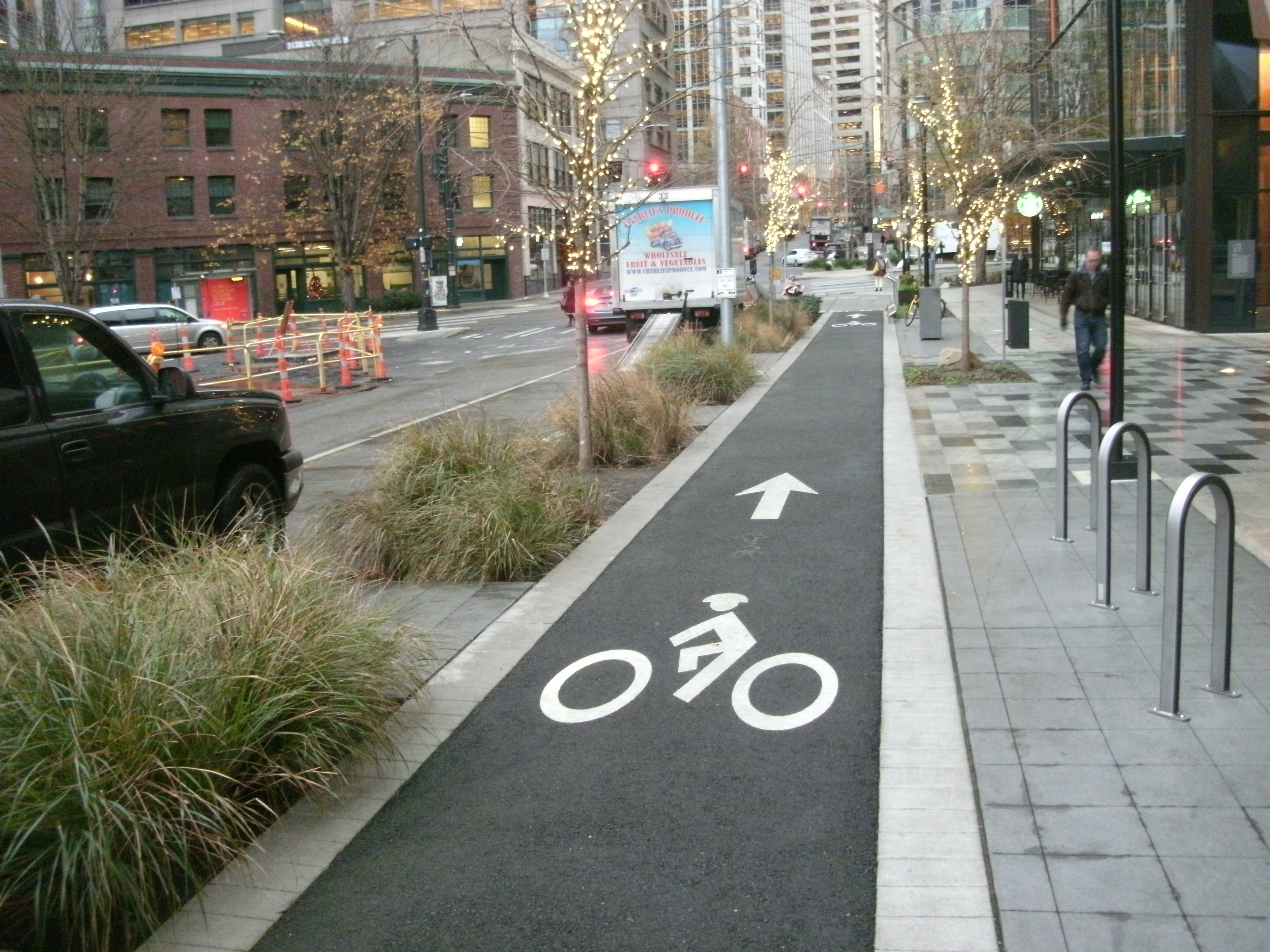

If some riders choose to not wear a helmet, that may be fine, but prohibiting helmets is irresponsible. Riders have a much higher cumulative risk of accidents that are not their fault than customers. It's a workplace safety issue.